

Vines Don’t Grow in Rows
On Hasan Göktepe’s Echoes Within Walls

A Voxel is a Brick
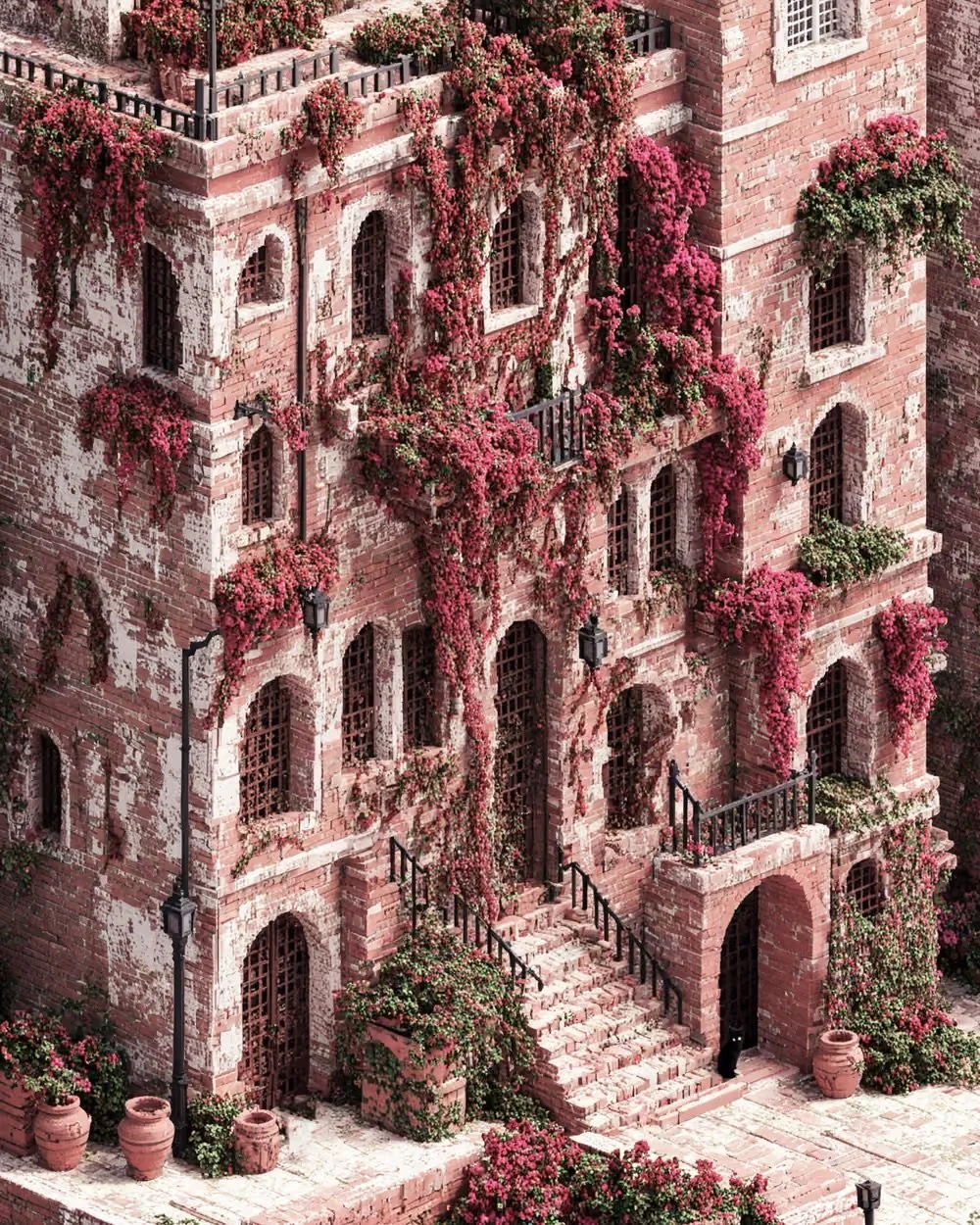
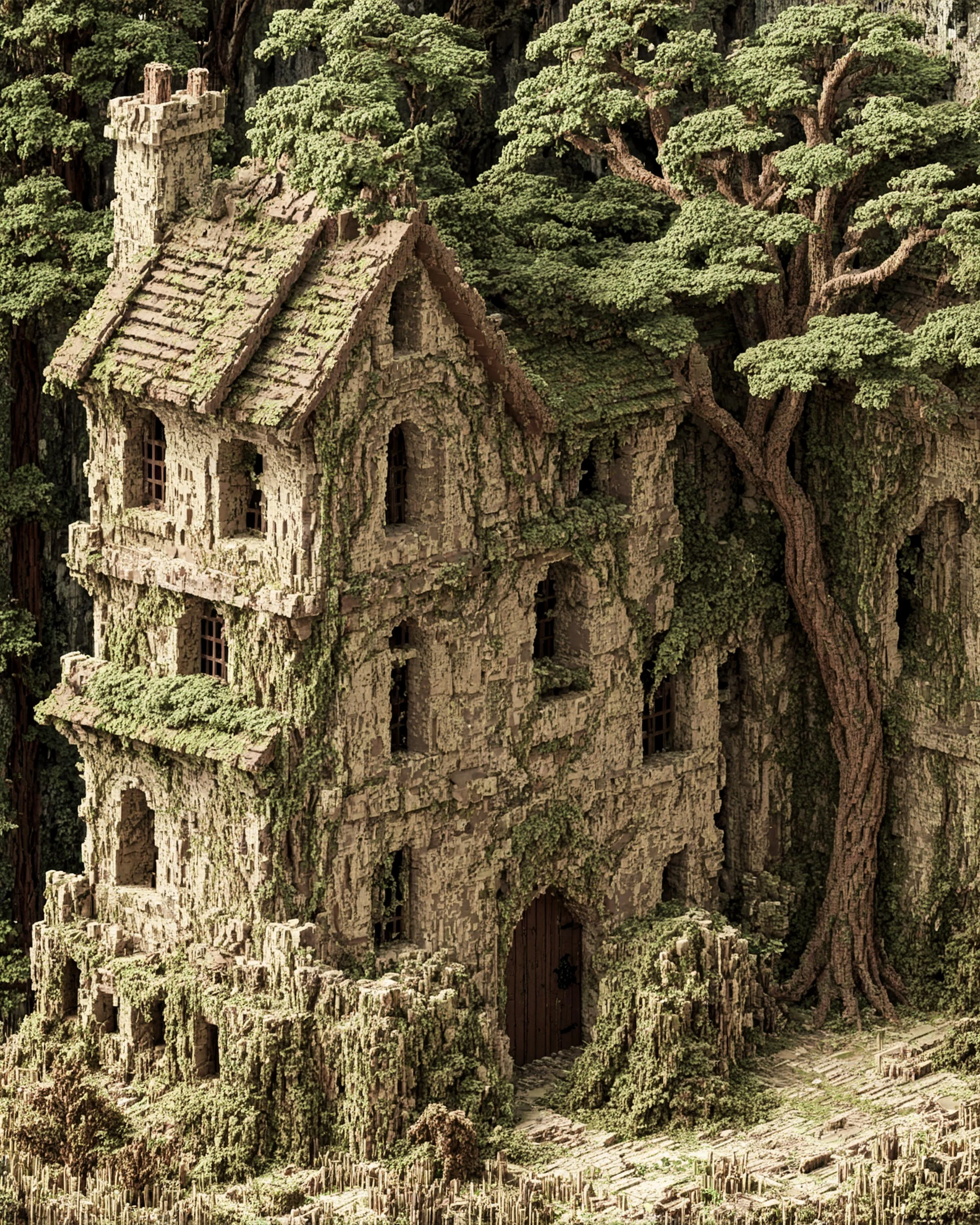
The most convincing thing about Echoes Within Walls is the pixel, and it is the thing the project says least about. A pixel samples a picture plane, but a voxel is a brick: it has volume, it stacks, it bears, and it forces whoever uses it to build rather than to draw. That reinstates a modular discipline most software was designed to abolish, and it suits the subject exactly, because masonry, pantiles, treads and rows of vines were all modular long before anyone modelled them. The grid forbids fudging, the way drafting at a fixed scale forbids it.
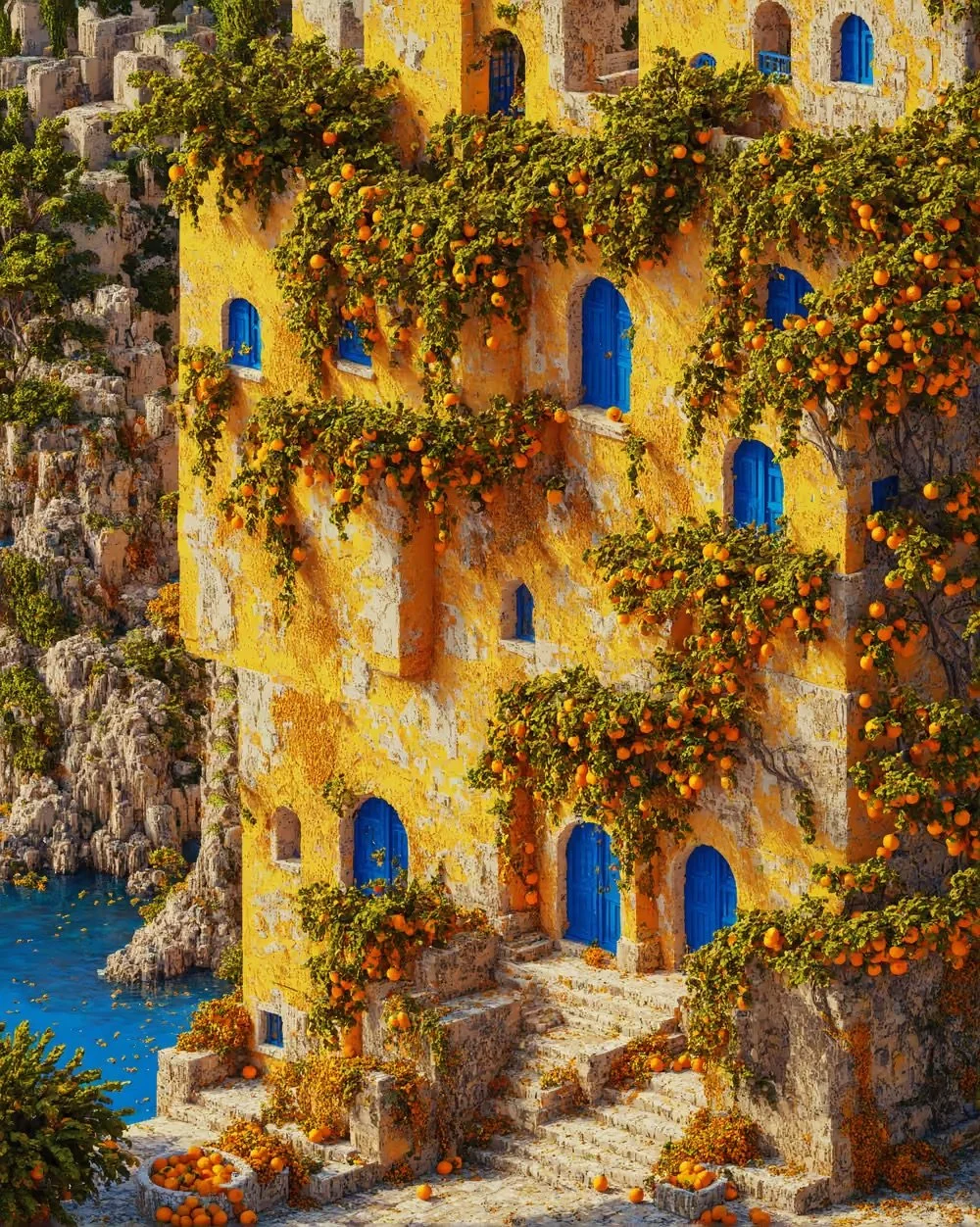
What makes the work remarkable is that the complexity arrives through a medium built to resist it. Resolution and detail are not the same thing, and the voxel is a coarse unit that can only produce density by accumulation, which means every cascade of blossom and every weathered wall is a quantity of decisions rather than a finer setting. This is the logic of mosaic, of tapestry, of tilework, of brick bonding itself: fine effect wrung out of stubbornly blunt units. It also gives the images two viewing distances, which is rare. Step back and the scene resolves into atmosphere, step in and the grid reasserts itself and you can see the labour. Most rendering collapses that distinction. Here it is the whole pleasure.
Portrait of a Building
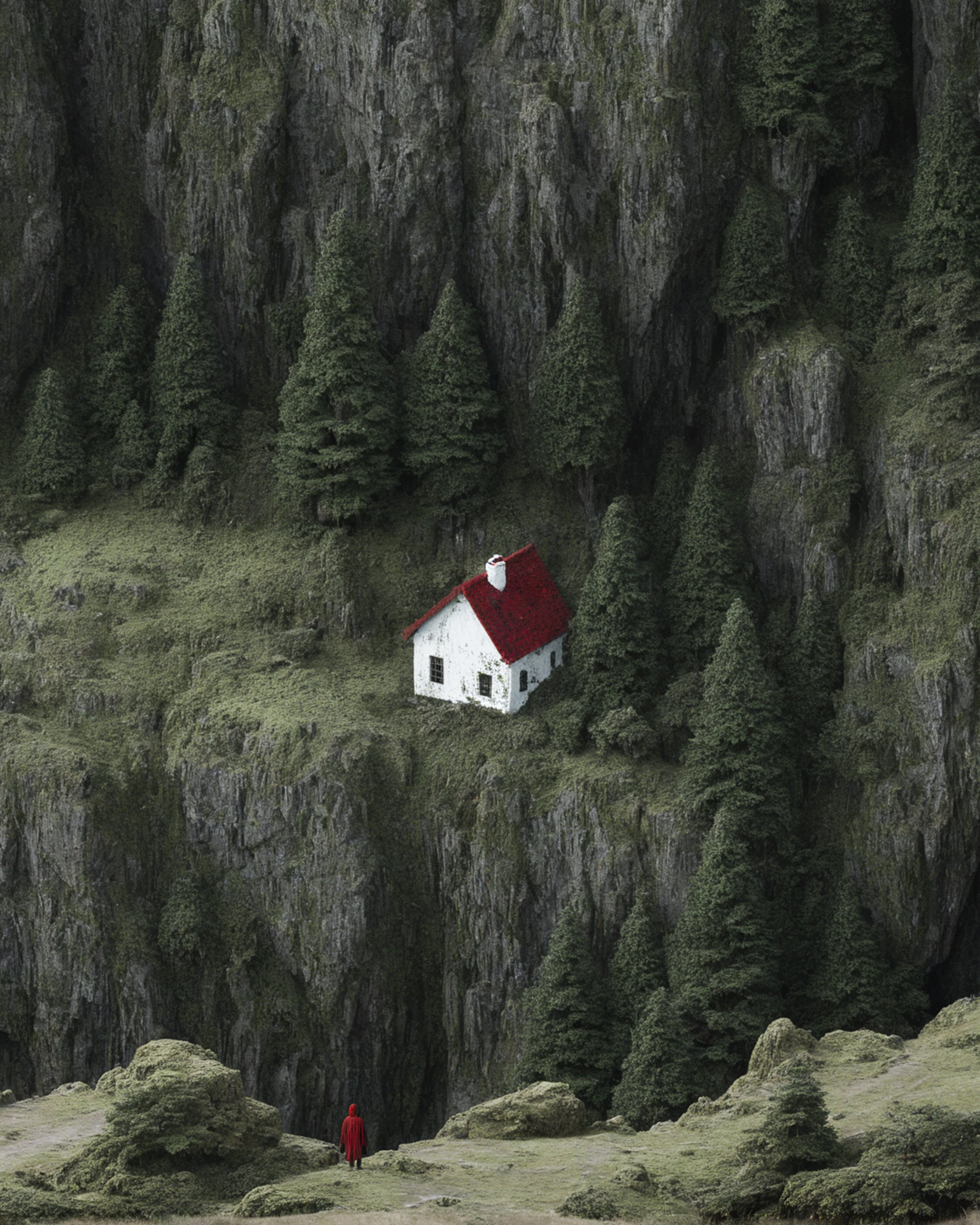
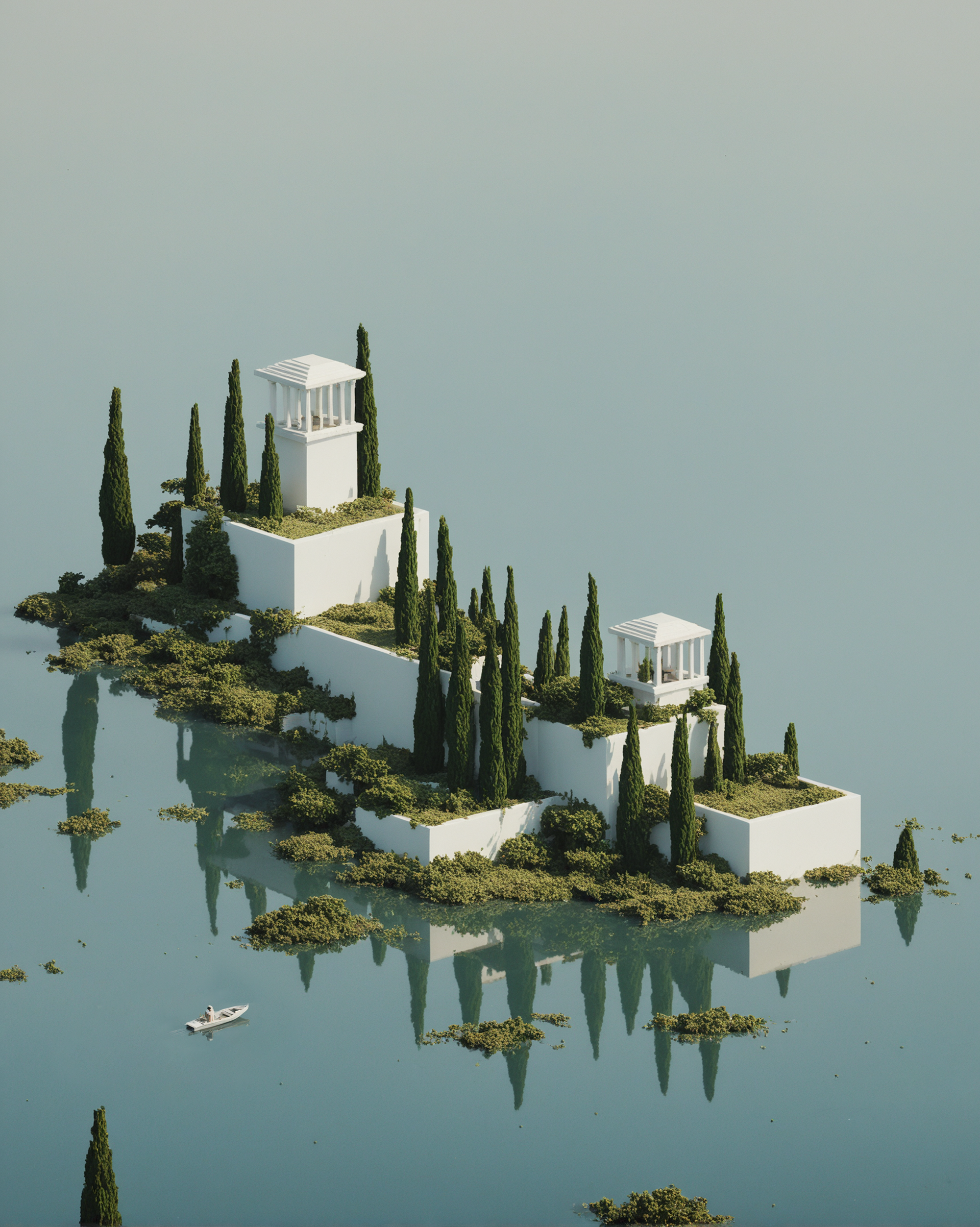
The other achievement is one of subject. In both architectural visualisation and game environment art, which is where Göktepe trained, buildings exist in order to host something else: a product shot, a level, a character's passage through a space. The brief is always background. Here the building is the protagonist, centred and framed with nothing permitted to upstage it, and the result reads as portraiture rather than as scenery. That inversion is a real departure from his own professional grammar, and it is what gives these images their stillness. When a figure does appear, in the vineyard, it is the small white mannequin of the rendering trade, which is exactly the right companion for a portrait of a building: not an inhabitant, but a measuring instrument, quietly establishing scale.
Memory in the grain
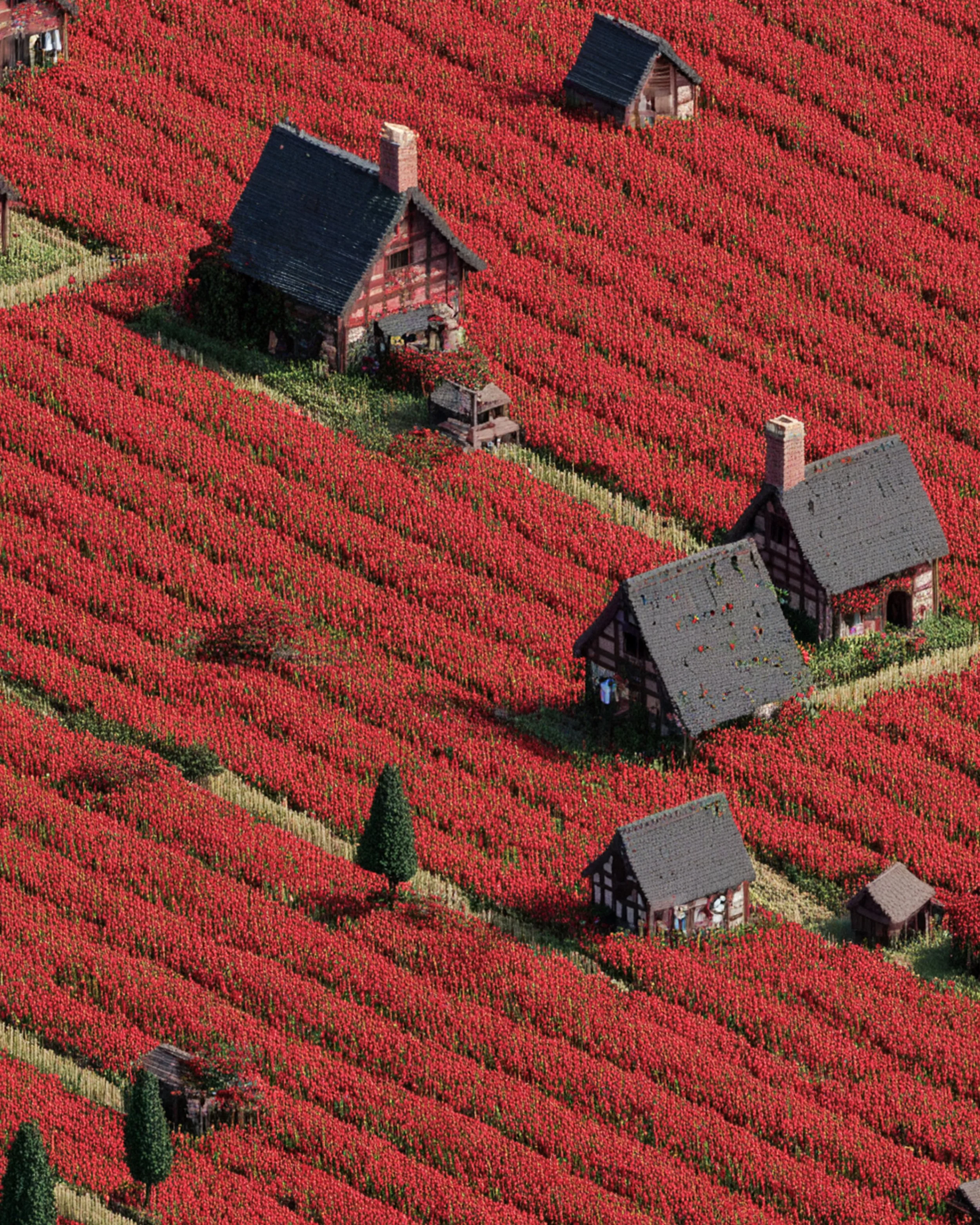
The nostalgia is not incidental either. The voxel arrives carrying a memory of its own: limited palettes, the isometric view of a certain generation of games, the sprite as a childhood grammar. That memory belongs to the material rather than to the depicted building. Low resolution helps, since a wall of countable cubes makes you supply the missing surface yourself, and these are miniatures besides, offered at the scale of the model and the doll's house, with the pull of a world small enough to hold. The range is wide and genuinely enjoyable, from sun drenched dayscapes to moody night scenes, from something like a Greek temple to a pagoda to a gothic chapel to one modest house alone on a hill.
Who Prunes the vines
All of which makes the accompanying statement a curious document, because it is arguing for a different body of work. It proposes architecture as involuntary memory: walls retain what happened in their vicinity, a crack or an ivy count as testimony, vegetation converts abandonment into renewal, and the ruin arrives as "an intermediate state" rather than an end. This is a respectable position with a long bibliography behind it, most of it written by people who found ruins beautiful before they found them meaningful. It is also not quite what the pictures are doing, and what they are doing is more particular.
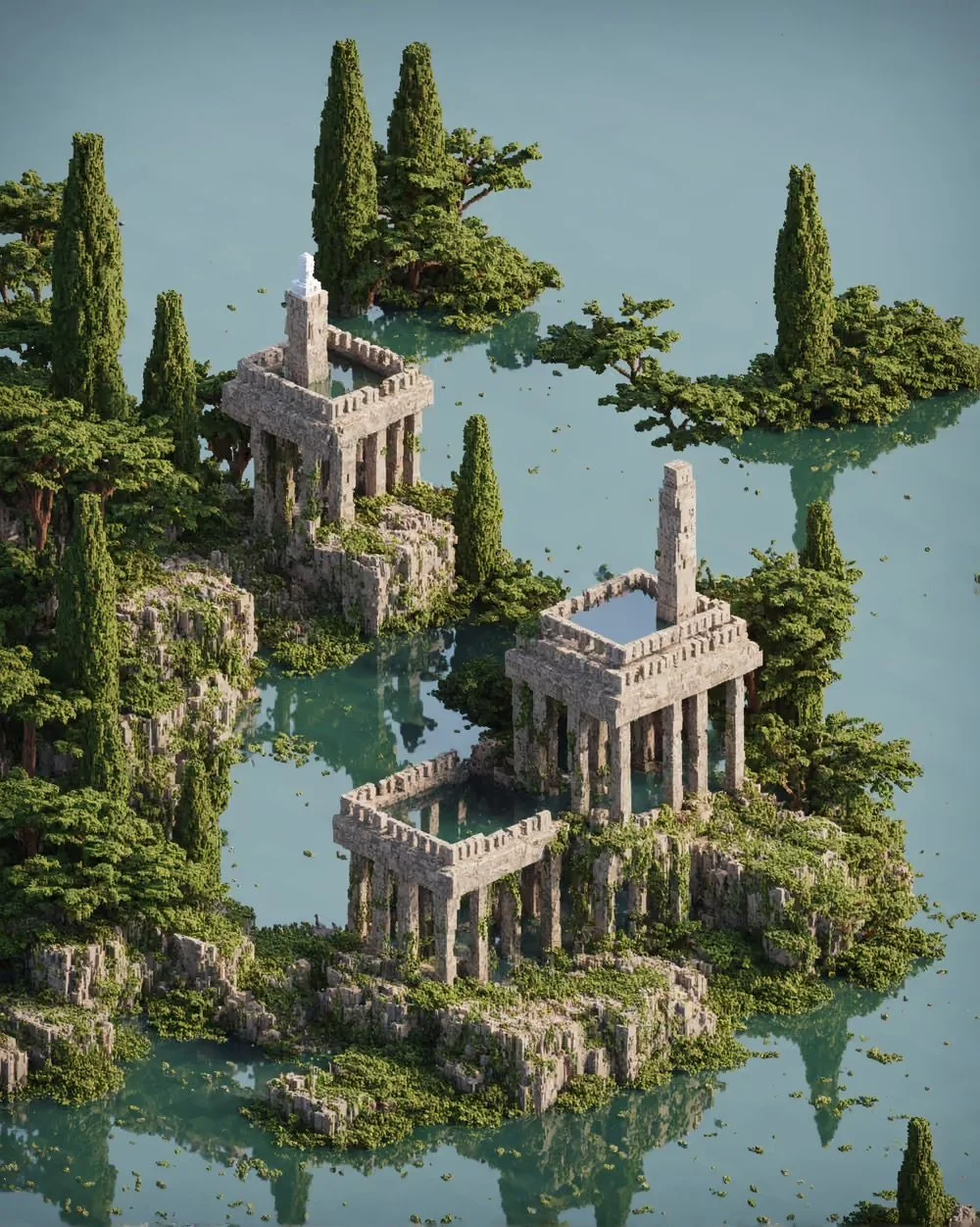
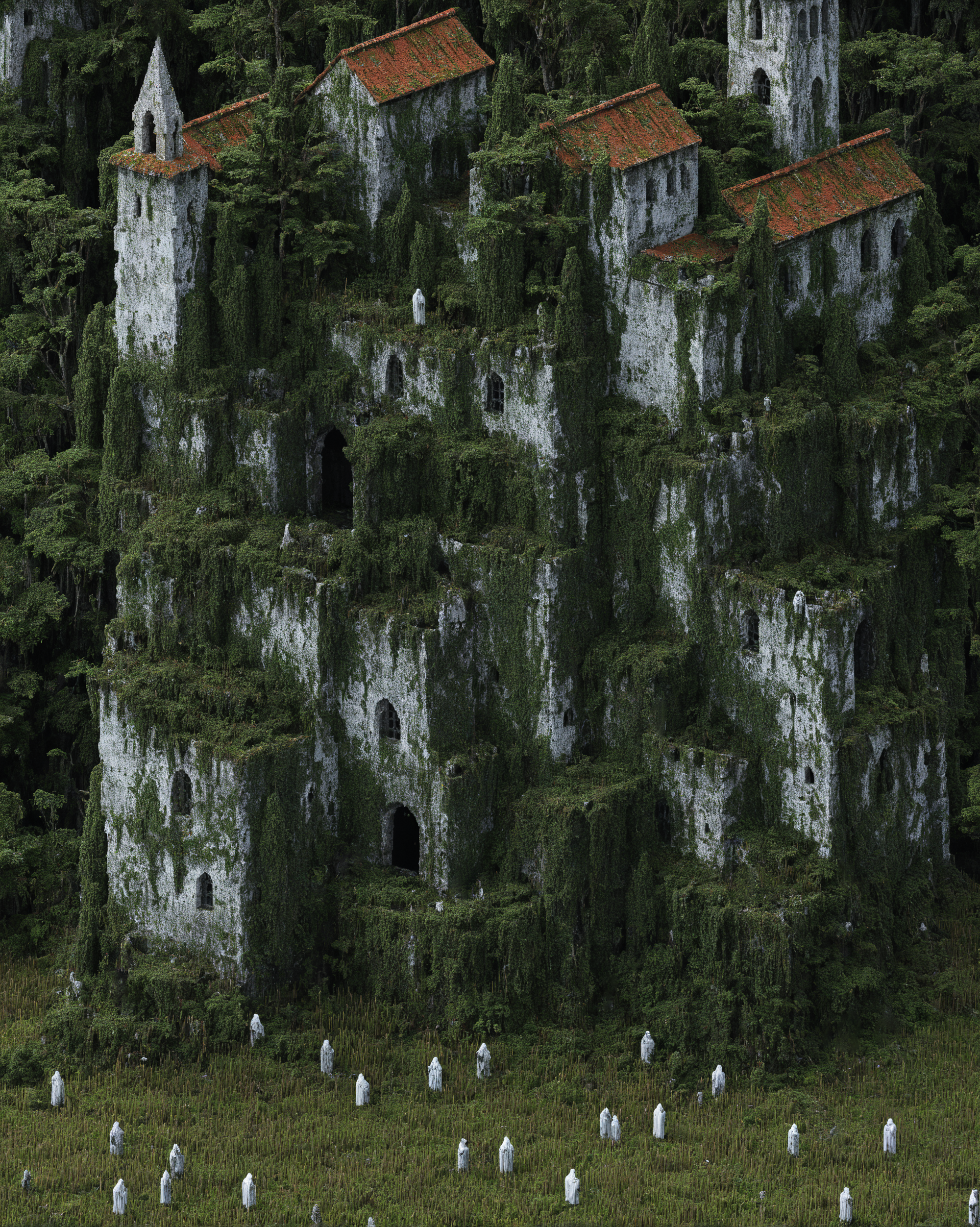
What they depict, across the collection, is upkeep. Limewash worn back to its ground coat is a maintenance material behaving exactly as specified. Flowers in terracotta are cultivated ornamentals rather than encroachments. Lit windows are occupancy. And in the largest work the buildings are genuinely ruined while the land around them is unmistakably worked, which is a sharper observation than abandonment ever was. Vines do not grow in rows, terraces do not maintain themselves, cypresses do not line a path. Each of those is an annual labour by someone who has not left.
This is an old conflict with a precise shape. Age-value, the pleasure of accumulated time, asks that you leave a building alone and let it proceed toward dissolution, since every repair destroys a little of the evidence you came to see. Use-value asks the opposite, because a building still in service gets patched, painted and repointed, and its history is continuously overwritten by its own survival. Echoes Within Walls claims the first in its text and delivers the second in its pictures, which is the difference between a place that has been let go and a place that is being kept.
Coming Back
The stronger idea is already in the material. Heidegger, looking for the root of building, found that dwelling and building were once the same word, and that this building meant cultivating: tending, protecting, coming back to something that grows. His example, as it happens, was the vine. On those terms dwelling is not a residue left in a wall after everyone disperses, it is an activity, and the only evidence of it is that something has been kept. The works are full of that evidence.
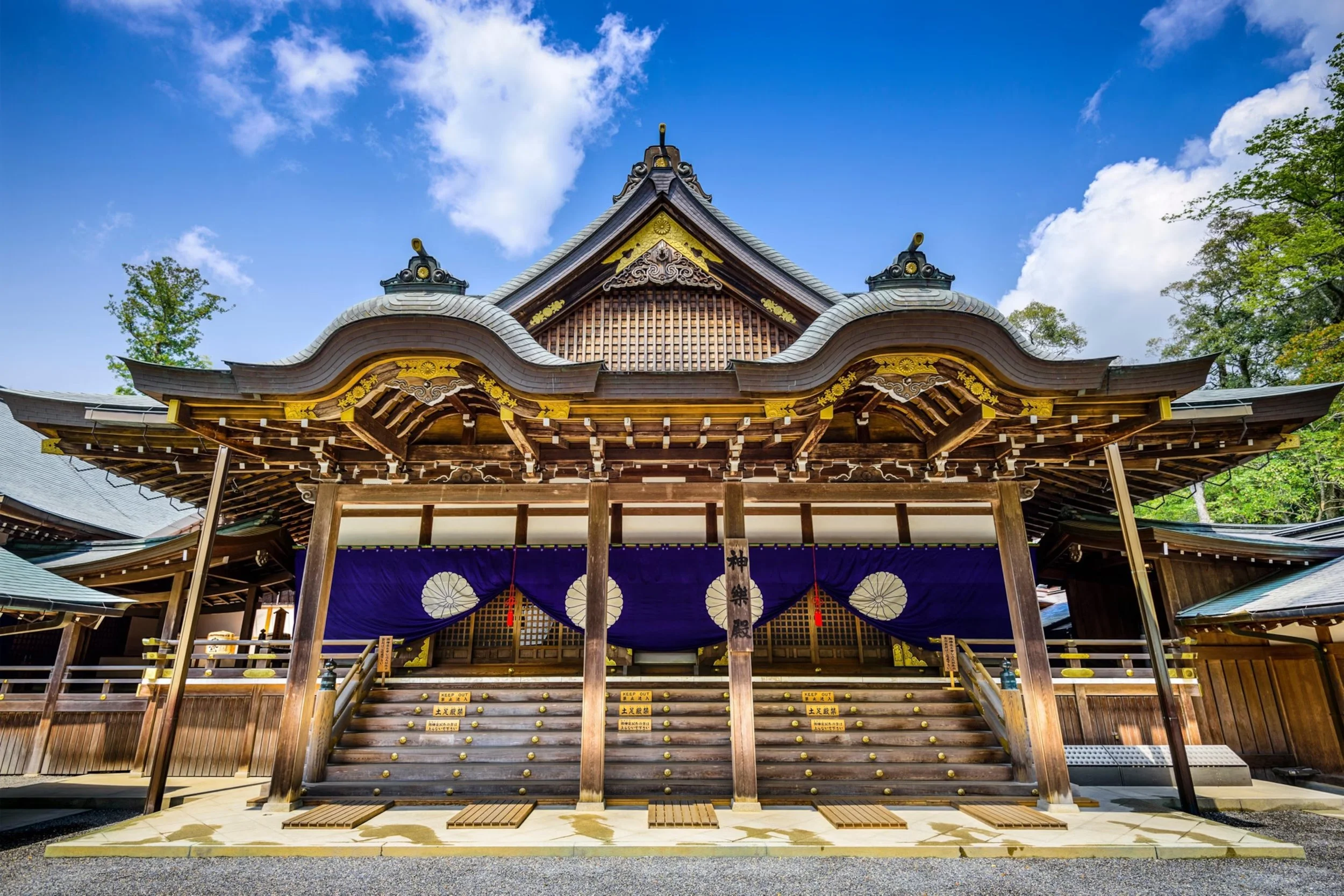
Nor is patina the only theory of permanence available. Ise Jingū has been rebuilt on adjacent ground every twenty years for over a millennium and nobody thinks the shrine is any younger for it. Set beside that, ruin-lyricism looks less like a law of time and more like one regional taste with an unusually good publicist.
The Echo and the Mean
Which leaves PixaVoxel, introduced late and framed as reassurance about authorship, when it is the most interesting object in the room. A model trained on an artist's own archive is an echo in the strictly literal sense: it can only produce from what has already happened, and it cannot tell you which instance it is drawing on. It also complicates the metaphor in a way worth following. An echo attenuates and picks up the character of the room it crosses, while a model on a closed corpus converges, smooths its outliers and drifts toward its own average. One returns altered by where it has been, the other by how often it has been itself, and the second is the newer condition and the one nobody has written well about yet.
An echo, in any case, is not a preserved voice. It is a degraded copy carrying information mostly about the room: the distances, the hard surfaces, the geometry that got in the way. These places tell us almost nothing about who lived in them, and a great deal about what keeps being done to them, on a schedule, by someone still in the habit of coming back. What persists, cube by countable cube, is the habit of looking, and that was in the artist's hands all along.