

Everyone Here Is So Nice
On the compliment economy, and why this field never learned how to disagree.
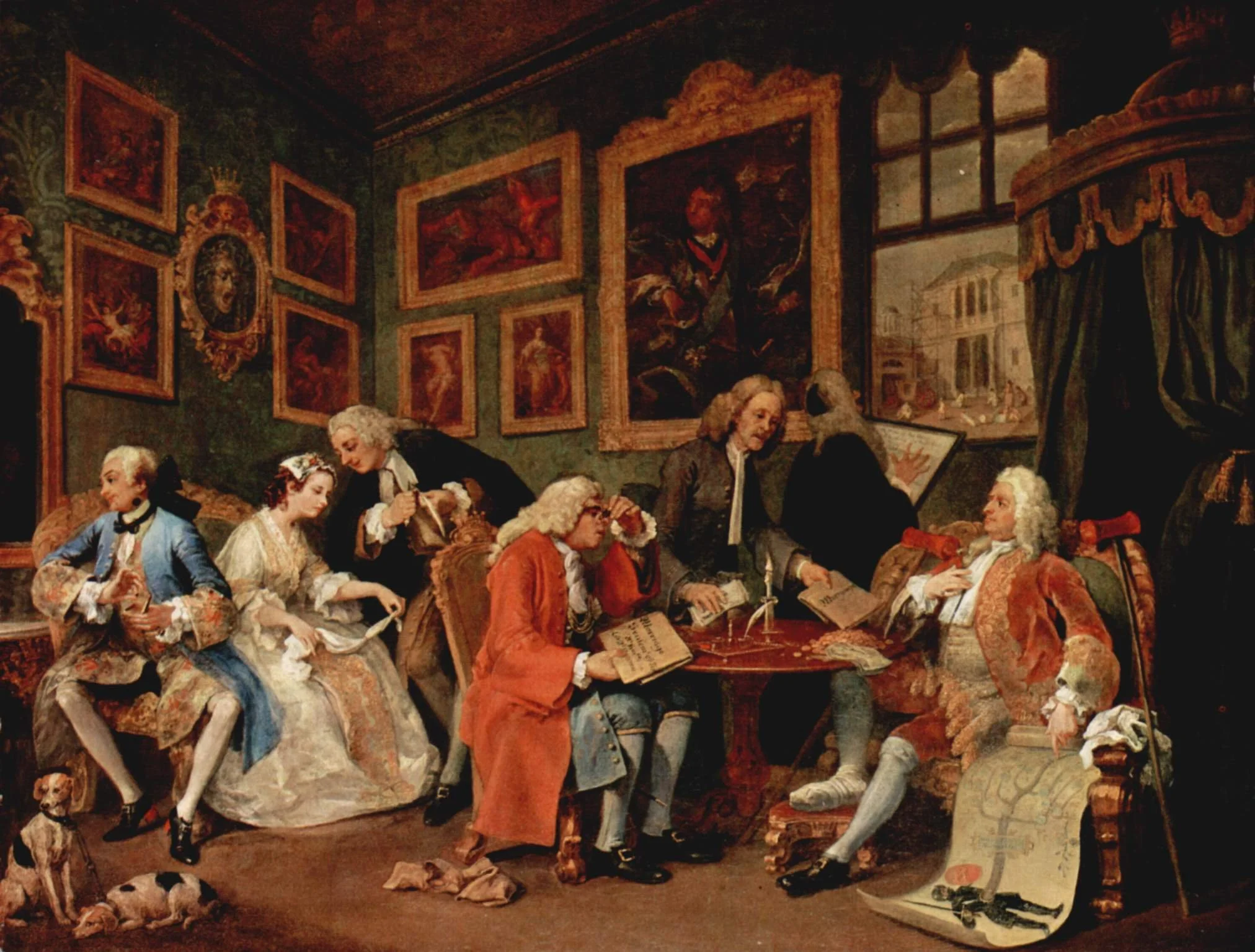
Mariage A La Mode, by William Hogarth
Everything here is groundbreaking.
Every project is visionary. Every artist is a pioneer. Every release is not just good but historic.
The vocabulary of this space, revolutionary, generational, transcendent, has inflated so far past meaning that it no longer works as language. It works as social lubricant.
Look at any comment section. An artist posts a work, and within an hour there are forty replies, each a variant of three words. Stunning. Incredible. Congratulations. Nobody says what the work is about. Nobody says where it sits next to anything else. The compliment is not a judgment. It is a deposit, and everyone understands the account it goes into.
We have built, without quite deciding to, a compliment economy. And like any economy built on a resource with no scarcity, it has quietly devalued everything it touches.
What does it actually cost us when nothing is ever bad?
Criticism is not critique

Start with a distinction, because losing it is how we got here:

Criticism is personal.
It targets. It diminishes. When someone says this is bad work and means I don't like you, or I want your audience, that is criticism. It tells you more about the speaker than the subject. We are right to distrust it.
Critique is structural.
It asks: what is this work doing? What does it assume? What does it reproduce? What does it claim that it fails to deliver? Critique takes the work seriously enough to hold it accountable. It is a form of respect. You cannot critique something you don't believe matters.
This field has collapsed the two into one thing, and then banned the one thing. Any pushback reads as attack. Any rigour reads as gatekeeping. And so we replaced the discomfort of critique with the comfort of the compliment, and called it community.
But notice what kind of failure this is. It is not a failure of courage, or not only. It is a failure of literacy. Telling critique from criticism is a skill. So is receiving one without hearing the other.
A field where every observation lands as an insult is not a field of cowards… it’s a field that never learned to read.
Critique has manners
Here is the part I have come to think matters most, and it is the part nobody talks about.

Critique is not just a type of content. It is a social form, and like any social form it has a craft to it. When to say the difficult thing, and when to wait. Whether it belongs in public or across a table. How to open so the person can actually hear what follows. How to be precise about the work without being cruel about the person. How to receive a hard reading of your own work without treating it as war.
None of that is instinct. All of it is learned, and it is learned the way manners are learned: by being around people who have it, in rooms where it is practised, over years.
The traditional art world, whatever else is wrong with it, runs those rooms. The studio visit. The crit, where art students sit through public dissection of their work weekly until it stops feeling like death. The editor who returns your draft with the flaws named. The dealer who says quietly, not this series. People come out of that world knowing how to deliver a hard judgment and how to survive one, not because they are better people, but because they were trained. Prudence there is not virtue. It is education, plus the memory of what indiscretion costs.
This field has no crit. No editor. Most people here have never once watched a difficult judgment delivered well, in person, by someone who cared about the work. The only models available are the quote tweet and the pile-on, which is to say the only visible way to disagree is the worst way. So people conclude, reasonably, that disagreement itself is violence, and they retreat into the compliment.
We do not just lack critics. We lack the manners of critique, and manners cannot be downloaded. They have to be practised somewhere.

What the compliment economy produces
Three things. I have said them before and I will keep saying them.
First, no canon. A canon is not a hierarchy of taste. It is a shared frame of reference: the works a field returns to, argues about, builds from. Canons form through contestation. Something becomes canonical not because everyone praised it, but because the argument around it was rigorous enough to establish what it meant. Where every project receives the same register of acclaim, nothing sediments. There is no argument to return to. There is only the feed, and the feed forgets.
Second, no standards. This is the one that matters most for artists. If every work is groundbreaking, the word means nothing, and the artist making genuinely difficult, genuinely rigorous work has no way to distinguish her practice from work that is simply well marketed. The compliment economy does not lift all boats. It floods the harbour.
Third, no memory. We have watched projects collapse, platforms fail, funds disappear. Each time, the post-mortem is either silence or recrimination. What we never do is the slower work of asking not who is to blame but what did this reveal about our assumptions. The compliment economy and the pile-on are two sides of one coin. Neither is critique. Both prevent learning.
And underneath all three, the same missing skill. A field that cannot deliver a judgment gracefully will not deliver one at all, and a field that delivers none cannot remember, cannot rank, cannot build.
The objection
Someone always says: but the honest conversation does happen, just privately.
It does, and it changes nothing, because a judgment that cannot be answered is not participating in the field. It cannot be cited, contested, or corrected. It cannot be wrong in public, which means it can never be right in public either. Whatever is said behind the work's back, however sharp, dies where it is said. The artist never hears it, the field never tests it, and the feed rolls on, stunning, incredible, congratulations.
Private honesty is not the alternative to the compliment economy. It is its silent partner.
The ask
I am not asking anyone to be unkind. That has never been the argument. Unkindness is abundant here and it has built nothing.
I am asking for something harder, and I want to be concrete about it, because "be more critical" is useless advice to people who were never shown how.
Tolerate the discomfort of genuine engagement. Say, publicly, this work interests me, and here is why it falls short of what it is reaching for, and sign it. Review a project with the seriousness you would want brought to yours. When someone does this to your work, resist the reflex that reads it as attack; ask instead whether the reading is accurate, which is a different question from whether it is pleasant. And build the rooms. The small ones, where the craft gets practised: the studio visit, the reading group, the crit. Manners are learned in rooms, and right now this field has none.
Because here is the thing about the compliment economy. It feels generous. It feels like support. It feels like community. And in the short term it is far more comfortable than the alternative.
But a space where nothing is ever wrong cannot produce work that is genuinely right. It can only produce work that is legible, likeable, and forgettable.
The highest form of respect you can pay this field, and each other, is to demand more of it.
That is what critique is. Not the opposite of generosity. The fullest expression of it.