

Every Revolution Forgets
by Carlo Borloni (@carlothecurator)
Edited by Museum Ghost
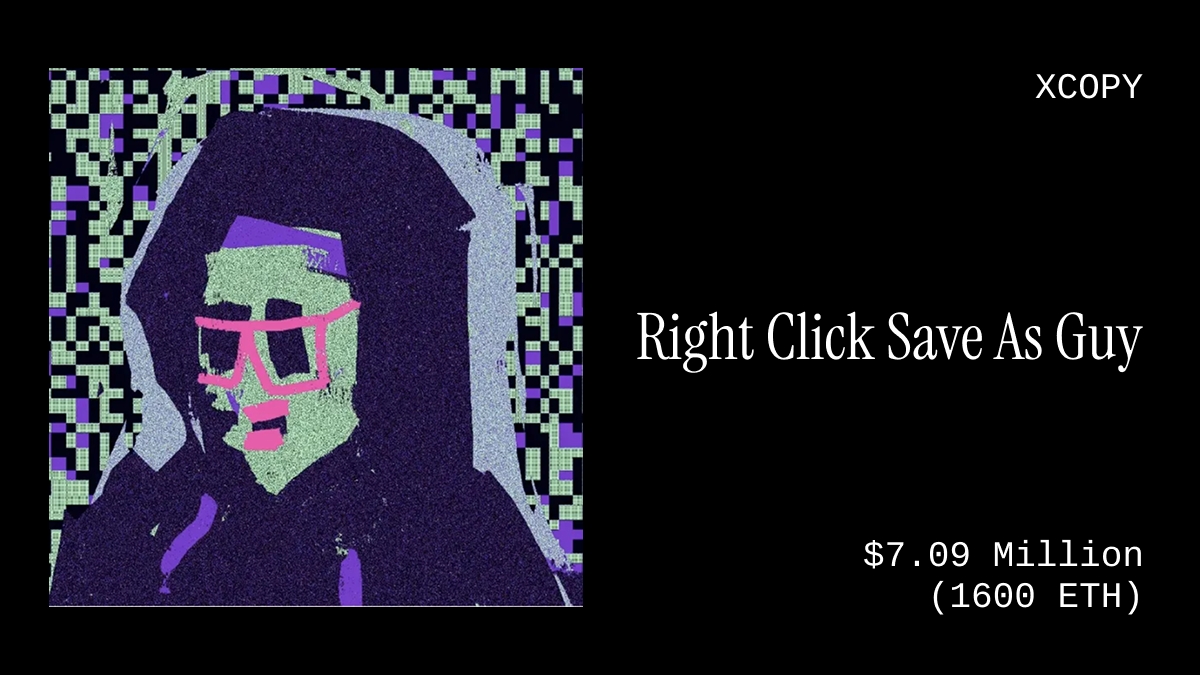
XCOPY, Right Click and Save As Guy (2018). Through corruption, repetition and digital decay, XCOPY developed one of the most distinctive visual languages in contemporary digital art. Rather than depicting technological failure, the work inhabits it, anticipating one of this essay's central arguments: technologies change, but the artistic questions they reactivate persist across history.
On Digital Art, Memory, and the History We Keep Repeating
Every artistic revolution begins with a promise.
The promise of breaking decisively from everything that came before it. Of inaugurating a language no one had imagined before. Of opening a territory still without maps, where every gesture appears inevitably new because nothing seems to exist before its emergence.
It is a promise art history knows well.
The historical avant-gardes believed it as they challenged the academies. Photography seemed to redefine the nature of representation. Conceptual art questioned whether the artwork needed an object at all. Every technological shift has generated the conviction that history had reached a point from which there could be no return, a decisive threshold separating the “before” from the “after.”
Working in digital art, I encounter that conviction almost every day.
Every new protocol promises a new beginning. Every technical innovation is presented as a decisive rupture. Every generation of tools seems to demand an entirely new vocabulary, as though the past had suddenly become inadequate for explaining the present.
Yet the longer I spend writing about digital art, speaking with artists and watching this ecosystem evolve, the less convinced I become that novelty is the most interesting thing happening here.
The questions are.
History rarely unfolds through absolute breaks. Given enough distance, revolutions begin to lose the sharpness of their edges. What once appeared as an irreversible fracture gradually reveals itself as another chapter in a much longer conversation. Languages evolve. Technologies change. Institutions rise and fall. The questions, more often than not, remain.
Every artwork carries traces of other artworks. Every gesture inherits problems it did not invent. Even the most radical movements continue conversations that began long before their protagonists were born, sometimes consciously, more often without realising it.
Originality, then, lies less in inventing questions that have never existed than in finding a language capable of answering old ones in ways that only a particular historical moment makes possible. Images do not replace one another. They accumulate. They contradict one another. They revive forgotten intuitions and return, sometimes centuries later, to ideas that previous generations left unresolved.
Art history, perhaps before anything else, is an archive of questions.
This perspective becomes particularly important when looking at the historical moment digital art is currently experiencing.
Over the past few years, our ecosystem has built, with astonishing speed, much of what previous artistic movements required generations to develop: markets, communities, institutions, collecting practices, production tools, distribution systems, and even its own mythology. Few artistic movements have expanded so rapidly while simultaneously reaching such a global audience.
That acceleration deserves to be recognised.
Blockchain has transformed the circulation of artworks. It has redefined the relationship between artists and collectors. It has introduced new ways of thinking about ownership, provenance and permanence. It has made possible artistic practices that, only a few years ago, belonged more to speculation than to reality.
Yet every acceleration produces its own blind spot: the faster a movement builds its future, the easier it becomes to lose sight of the history that allows that future to be understood.
This, I believe, is one of the defining cultural challenges facing digital art today. Not because digital art lacks a history, but because it sometimes mistakes novelty for historical exception.
We have become extraordinarily good at preserving transactions. We can reconstruct the provenance of an artwork block by block, wallet by wallet, transfer by transfer. In many respects, blockchain has solved one of the oldest archival problems art has ever faced.
What it cannot preserve by itself is memory.
Not memory understood as an archive of objects or a chronology of events, but memory as historical consciousness. The ability to recognise that many of the questions defining digital art today did not begin with blockchain, nor with NFTs, nor even with the internet itself. They belong to a much longer conversation, one that stretches across conceptual art, performance, photography, media theory and, ultimately, the entire history of artistic production.
This is not a limitation unique to digital art; it is the condition of every revolution.
Every new movement needs, at least for a while, to believe it is speaking a language no one has spoken before. Without that conviction there would be little courage to challenge existing institutions or imagine different futures. Enthusiasm has always been one of the engines of artistic change.
But enthusiasm carries a temptation: to mistake a new beginning for the beginning itself.
There is a profound difference between opening a new chapter and believing the book begins with us.
Art history exists precisely to remind us of that distinction.
Not to diminish the ambitions of the present, but to deepen them. It reminds us that the most radical ideas often have unexpectedly long genealogies, that technologies evolve far more quickly than artistic questions, and that images continue speaking to one another even when centuries separate their creation.
To study art history, then, is not to turn one's gaze backwards; it is to understand the present more clearly.
Because every revolution forgets.
But only those that learn to remember truly change history.
Questions Outlive Technologies
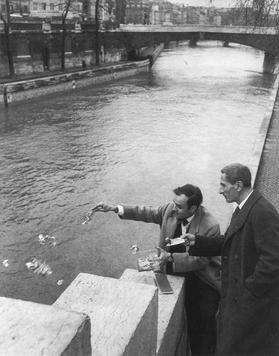
Yves Klein, Zone de Sensibilité Picturale Immatérielle (documented ceremony, 1962).
Courtesy: Archives Yves Klein.
There is a persistent assumption underlying much of the conversation surrounding digital art: the belief that every new technology inevitably produces new ideas.
It is an understandable assumption. Whenever the way we create, distribute or collect artworks changes, we instinctively assume that art itself has changed with it. History, however, suggests something less straightforward.
Technologies rarely invent questions; more often, they create the conditions under which old questions can finally be asked again.
The distinction is subtle yet fundamental: it shifts our attention away from innovation itself and toward the continuity of artistic thought. What appears unprecedented is often a familiar problem returning in an unfamiliar form.
One of the clearest examples of this dynamic can be found in one of Web3's defining gestures: the burn.
Within blockchain culture, burning a token means removing it permanently from circulation. It is neither an accident nor a technical malfunction. It is a deliberate act of subtraction. An irreversible decision that alters not only the history of an artwork, but sometimes the work itself.
Entire projects have been built around this principle. Some artworks exist only until the moment they are destroyed. Others acquire meaning precisely because something has been sacrificed. In many cases, the impossibility of reversing that gesture becomes inseparable from the artistic proposition.
Viewed only through the language of blockchain, all of this appears radically new. But perhaps we are asking the wrong question: instead of asking whether the burn is unprecedented, we might ask what artistic question it allows us to revisit.
To answer that question, we need to step away from blockchain for a moment.
In 1959, Yves Klein began developing one of the most radical conceptual propositions of the postwar period: Zones of Immaterial Pictorial Sensibility.
The title itself contains a remarkable shift: the artwork no longer coincides with an object, but with a possibility.
Collectors did not purchase something to display on a wall. They purchased the right to participate in an immaterial work. The documented receipt-burning and gold-into-the-Seine ceremony occurred later, in the 1962 transfer with Dino Buzzati.
The receipt certifying ownership was never intended to become the artwork's final form; quite the opposite. In that ceremony, the receipt was burned while part of the gold used for the purchase was ceremonially thrown into the Seine.
The work became complete only when something disappeared.
For centuries, permanence had been inseparable from artistic value. To preserve meant to protect, to archive meant to transmit, to collect meant to prevent disappearance.
With Klein, almost the opposite occurs: absence ceases to represent failure and becomes language.
This is why the blockchain burn becomes interesting. Not because it repeats Klein, since history is rarely so literal, nor because Klein anticipated blockchain, which would reduce both practices to little more than historical coincidence. It becomes interesting because both return to the same question.
What remains of an artwork once its material support disappears? Where does artistic value ultimately reside: in the object, in the certificate, in the gesture, in memory, or in the story that continues to circulate after every material trace has vanished?
These are not blockchain questions; they are art historical questions. Blockchain simply creates a new technical condition in which they become urgent once again.
This, I believe, is where much of Web3 criticism has stopped too early.
We have become exceptionally good at explaining how the burn works, and far less interested in asking why artists continue to find the gesture meaningful.
The conversation has often revolved around token mechanics, scarcity, smart contracts and economics. Far less frequently has it asked what cultural lineage those gestures belong to.
That is not a criticism of artists. It is a criticism of criticism.
Because technologies become culturally significant not when we understand how they function, but when we understand what they allow us to think.
Perhaps this is one of the most valuable lessons art history offers the present.
Ideas almost always outlive the media through which they are expressed. They wait, sometimes for decades, sometimes for centuries, until a new technology, a different cultural condition or another historical moment allows them to return under another form.
This is why I have never found it particularly useful to think of art history as a catalogue of inventions; I think of it instead as an archive of questions.
Every generation inherits some of them, forgets others, and eventually encounters many of them again, convinced it is asking them for the first time.
The true revolution, then, lies not in inventing an entirely new question, but in finding the language that finally allows an old one to be answered.
No Movement Begins as History
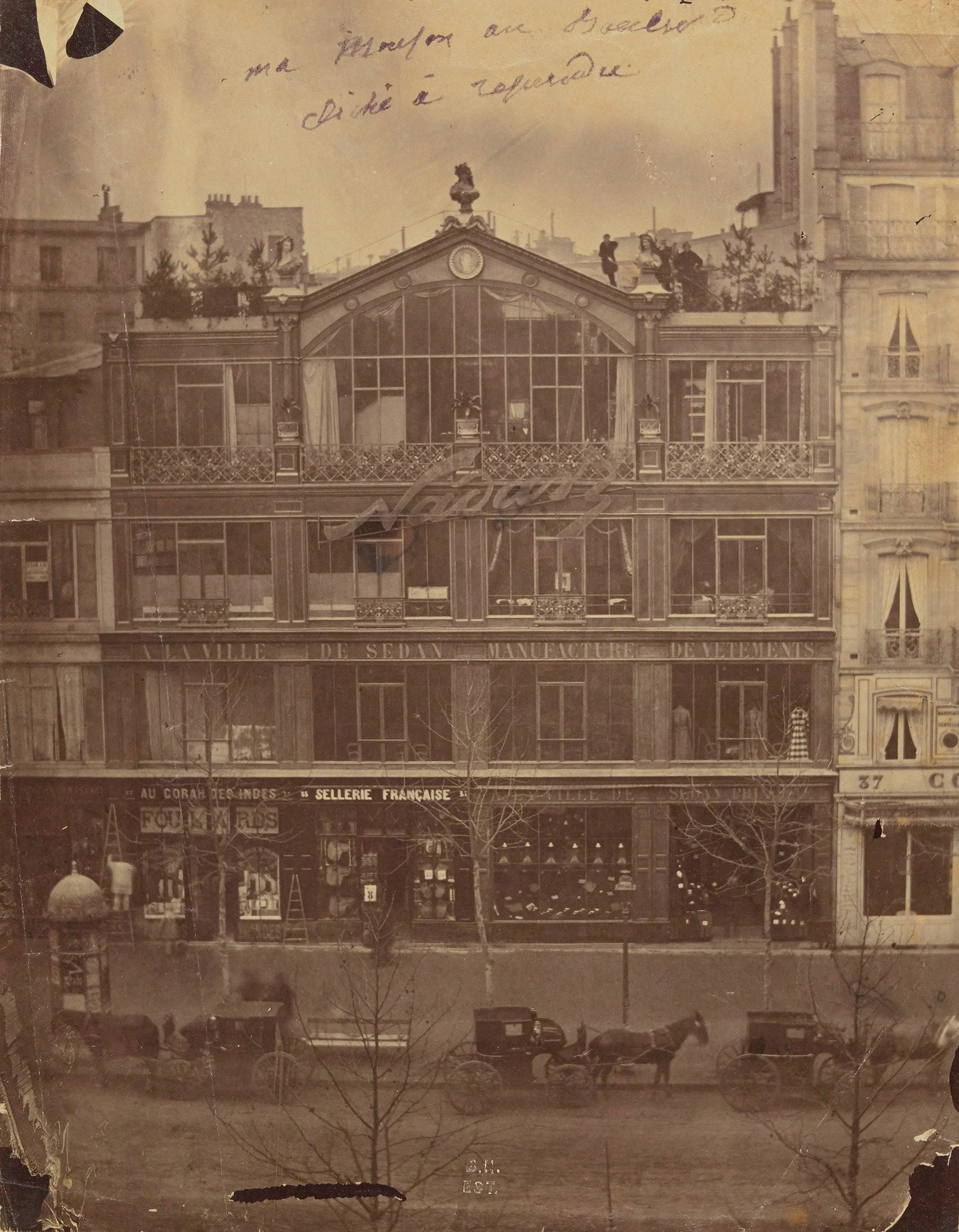
First Impressionist Exhibition at Nadar's Studio, Paris, 1874.
Courtesy: Bibliothèque nationale de France.
There is another mistake the present makes with remarkable consistency.
We tend to imagine artistic revolutions as moments in which a new visual language suddenly appears, overturns everything that came before it and immediately changes the course of history.
It is an elegant story. It is also rarely true.
No artistic movement begins as history; it begins as a problem.
Before becoming a chapter in textbooks, every avant-garde is simply a community attempting to build an alternative. An alternative aesthetic, certainly, but also an alternative economy, an alternative network of institutions, an alternative critical discourse and, perhaps most importantly, an alternative way of deciding what deserves to be seen.
Art history remembers movements through their masterpieces. Much less often does it remember the structures that allowed those masterpieces to survive.
Yet those structures are rarely secondary; more often, they are the revolution itself.
When we think about Impressionism today, we immediately think of light, broken brushstrokes and paintings that transformed the representation of modern life.
History has compressed the movement into a style.
Those who experienced it firsthand saw something very different: artists rejected by the Salon, critics dismissing unfinished paintings, collectors unwilling to take the risk, institutions convinced that these works had no future.
Impressionism did not begin as an aesthetic victory; it began as an institutional failure.
Its response was not simply to paint differently. It was to build a different system: independent exhibitions, new dealers, different collectors, alternative spaces, another critical conversation.
Long before Impressionism became one of the defining visual languages of modern art, it had already built the conditions that allowed that language to survive.
History often remembers the paintings and forgets the infrastructure.
This pattern repeats itself with remarkable consistency.
Artistic revolutions do not transform culture simply because they produce new images. They endure because they eventually transform the way images circulate, how they are discussed, how they are collected, how they are exhibited and, ultimately, how they are remembered.
Looking at digital art today, it is difficult not to recognise that the same process is unfolding once again.
For years, the conversation surrounding Web3 focused almost exclusively on technology: blockchain, smart contracts, wallets, marketplaces, tokenisation. All of these developments were essential. None of them, however, fully explains why digital art has become a cultural movement rather than merely a technological one.
The real transformation happened elsewhere.
For the first time, thousands of artists began building an ecosystem that no longer depended entirely on the structures that had previously ignored them. Collectors started speaking directly with artists, independent curators emerged outside traditional institutions, and new forms of publishing, criticism and exhibition began developing alongside the artworks themselves.
None of this happened because someone designed a master plan. It happened because every artistic movement eventually discovers the same necessity: a language cannot survive if it depends entirely on institutions that do not yet know how to read it.
This, perhaps, is the point at which a movement begins to mature: not when it produces extraordinary artworks, but when it begins producing the conditions necessary for those artworks to outlive their own moment.
Markets are part of those conditions, and so are collectors. But they are not enough.
Every mature artistic movement eventually learns that it must also produce criticism, archives, exhibitions, publishing, disagreement, interpretation.
Without them, even the most influential works risk remaining trapped within the historical moment that produced them.
This is why I find the current moment in digital art so compelling. Not because the technology is new, but because, for the first time, the conversation is beginning to extend beyond the technology itself.
The most interesting question is no longer whether blockchain can support art; it already has. The more interesting question is whether the cultural structures surrounding digital art will prove capable of supporting its history.
Because every revolution eventually builds its own system. The ones we continue to remember are those that succeeded in building one strong enough to preserve not only their artworks, but the conversations those artworks began.
How Memory Is Built
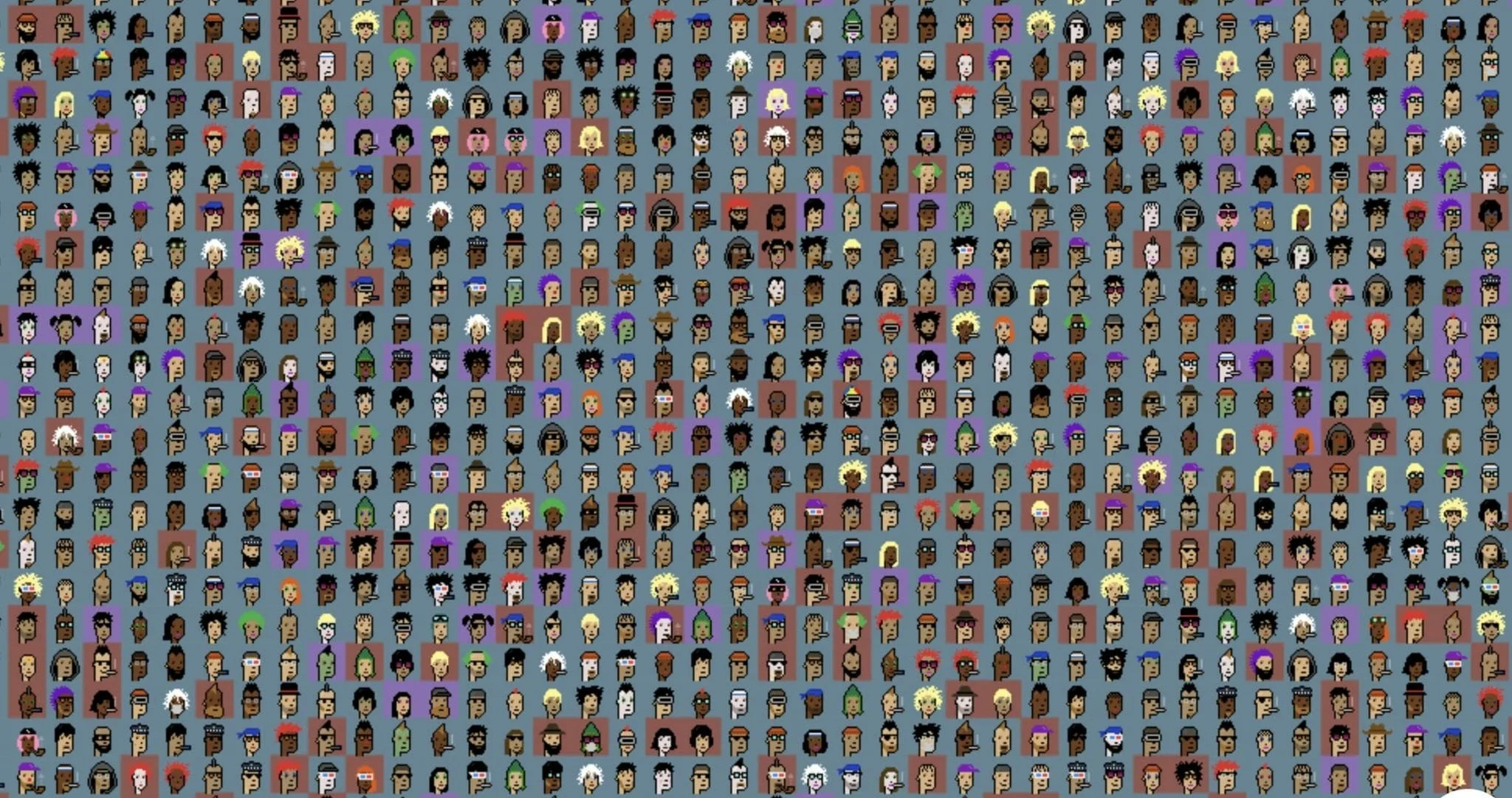
CryptoPunks, 2017.
Courtesy: Larva Labs.
Every artistic revolution produces artworks. Far more rarely does it produce the conditions necessary for those artworks to become history.
The distinction is easy to overlook because images and memory move at different speeds. Artworks belong to the present. Memory belongs to time. A movement may transform the visual language of its era and still wait decades before anyone begins to understand what, exactly, it changed.
This is why no artistic movement has ever been built by artists alone.
Around every body of work a broader ecosystem slowly emerges. Critics give language to unfamiliar images. Curators establish relationships between works that, until then, appeared unrelated. Publishers preserve conversations that would otherwise disappear. Archives transform isolated events into shared memory. Even disagreement plays an essential role.
Hostile criticism has often become as historically valuable as praise.
Reading the reviews that dismissed the Impressionists or the Dadaists today tells us less about whether those critics were right than about the intellectual climate into which those works first appeared.
Memory preserves context before it preserves consensus, and without that context, artworks survive only as isolated objects.
Digital art has already demonstrated that it can produce extraordinary works. Whether it is producing memory with the same determination remains a more open question.
The issue is not that criticism is absent, but that it still struggles to keep pace with the speed at which this ecosystem generates new images.
The work is already underway in publications such as Right Click Save and archives such as Rhizome's ArtBase, which are building critical language and preserving the context in which digital art is produced.
Few examples illustrate this tension more clearly than CryptoPunks.
There is little doubt that the collection has become one of the defining visual symbols of digital art. Their images have travelled far beyond the communities that first collected them. They have entered museums, auction houses and the broader visual culture of the internet.
Yet the discourse surrounding CryptoPunks has remained remarkably narrow.
We know the rarity rankings, the auction records, the provenance, the acquisitions. Far less attention has been devoted to the images themselves.
What kind of portrait is a CryptoPunk? An avatar, a self-portrait, a social mask? Or is it something closer to a taxonomy of digital identity, where individuality emerges not through psychological depth but through algorithmic variation?
These questions matter because they outlast markets. Prices fluctuate; interpretations accumulate. History rarely remembers an artwork because it was expensive. It remembers it because someone eventually explained why it changed the way we see.
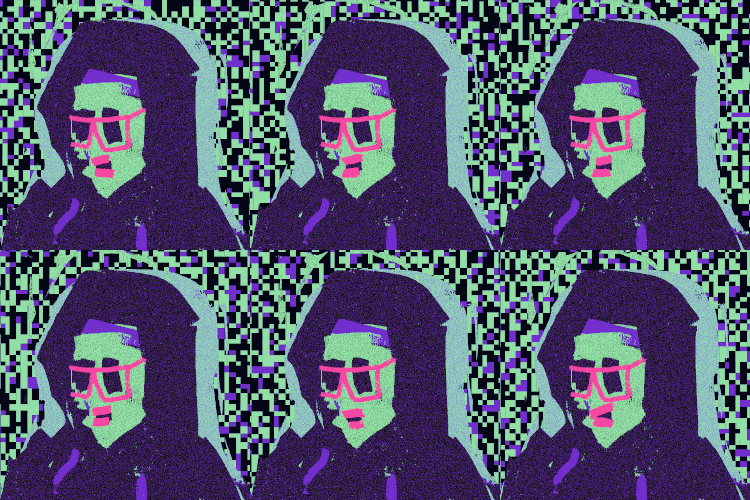
XCOPY, Right Click and Save As Guy.Rather than depicting technological failure, XCOPY constructs an expressive language in which corruption, repetition and instability become emotional conditions.
A similar imbalance surrounds the work of XCOPY.
Few contemporary artists have developed a visual language as immediately recognisable. The unstable loops, corrupted colour fields and persistent visual degradation do far more than establish an aesthetic signature. They construct a vocabulary through which digital instability becomes emotional instability.
His images rarely depict technological failure. They inhabit it.
Yet public conversation has often preferred to narrate XCOPY through economic milestones rather than artistic language. Auction records became headlines; his visual grammar rarely did.
I suspect this imbalance will become one of the defining blind spots of early Web3 art history.
Future historians will almost certainly ask different questions from the ones dominating today's conversations. They will not simply ask what XCOPY's works sold for; they will ask why they looked unlike anything that came before them.
If CryptoPunks reveal how easily an artwork can become absorbed into its own market history, Sam Spratt points toward a different possibility.
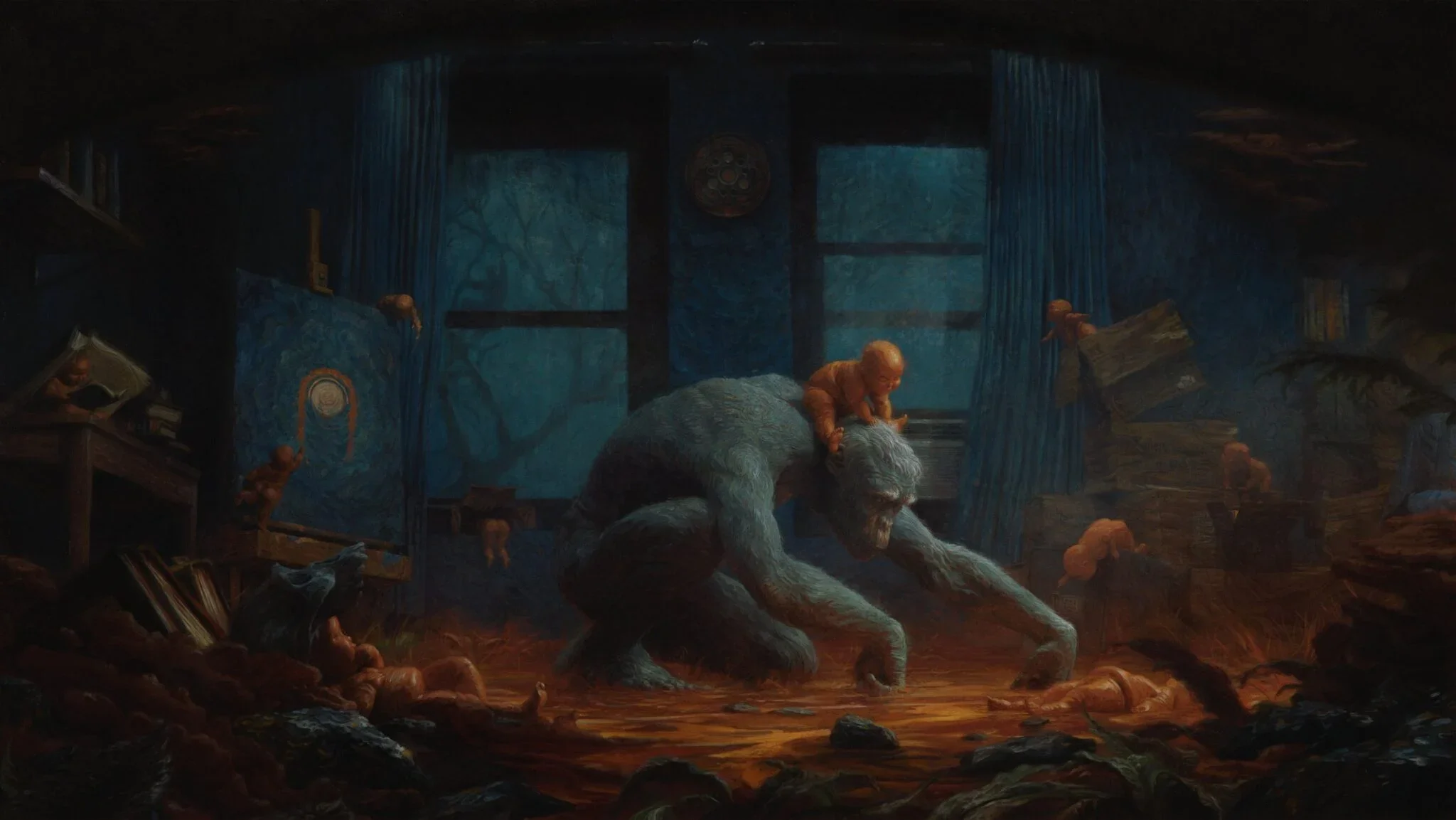
Sam Spratt, Luci.
Courtesy: Sam Spratt Studio.
Luci was never experienced simply as a collection of images. From the outset, it unfolded through an evolving narrative in which essays, symbolism and recurring visual motifs were not supplementary material surrounding the work, but part of the work itself. Meaning was not postponed until critics arrived years later. It accumulated alongside the images.
That distinction matters.
One of the recurring assumptions in contemporary art is that criticism follows creation: first the artwork appears, then history slowly explains it. Luci challenges that chronology. The project suggests that interpretation can emerge simultaneously with the work, becoming one of the conditions through which the work is experienced rather than a retrospective attempt to legitimise it.
Collectors were invited to do more than acquire images. They were invited to inhabit a narrative, recognise recurring symbols and participate in an evolving body of meaning. Ownership became only one layer of a much broader cultural experience.
I do not think this is merely a successful project. I think it points toward a different model for digital art, one in which criticism, curatorship and artistic production no longer develop on separate timelines, but grow together from the very beginning.
If digital art is to build a history rather than merely a market, projects like Luci suggest that criticism cannot remain something that arrives after the artwork. It must become part of the artwork's cultural life from the very beginning.
Memory, then, cannot be understood as something that naturally emerges with time. It must be constructed deliberately: every essay, every exhibition, every disagreement, every sustained reading of an artwork becomes part of the intellectual infrastructure that future generations inherit.
The question, then, is no longer whether digital art is capable of producing masterpieces; it already has. The question is whether we are building, with equal determination, the critical culture those masterpieces deserve.
Because every movement eventually builds a market. Only a few succeed in building a memory.
The Future Needs Historians Too
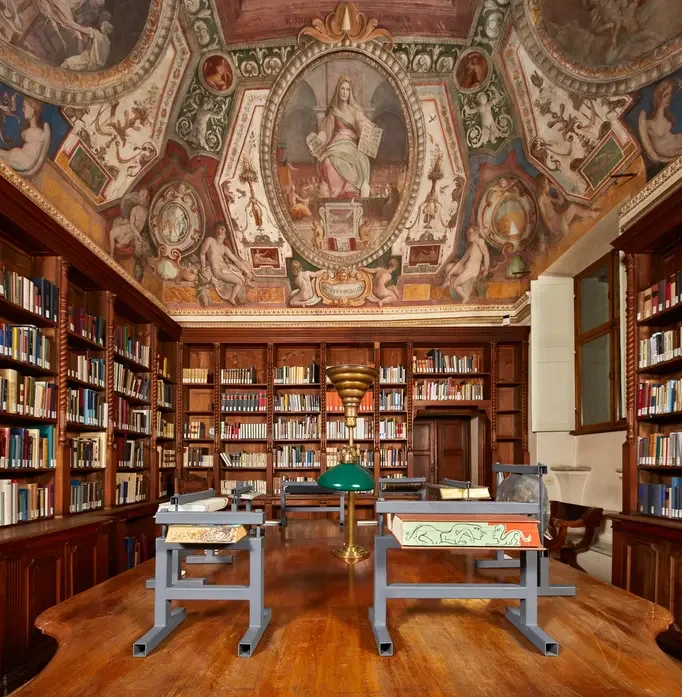
Reading Room of the Bibliotheca Hertziana, Rome. Every artistic movement ultimately depends on the institutions, archives and scholarship that preserve not only its works, but the intellectual conditions through which those works continue to be understood.
Courtesy: Bibliotheca Hertziana / Max Planck Institute for Art History.
There is a temptation that accompanies every artistic revolution: the belief that the present represents the furthest point history has ever reached, that the tools now at our disposal have transformed artistic practice so profoundly that everything preceding them belongs to another age.
It is an understandable belief, perhaps even a necessary one.
Every generation has imagined that it was living through a definitive transformation. Every generation has believed that its technologies would permanently redefine the production of images. Every generation has searched for new language to describe an excitement that, in truth, already belonged to those who came before.
History suggests something less comforting. None of those revolutions survived because they were new; they survived because someone continued telling their story.
Someone preserved letters, manifestos, catalogues, reviews, diaries and correspondence. Someone built archives before anyone could know whether those works would matter. Someone believed they deserved to be understood before they deserved to be celebrated.
That lesson speaks directly to digital art.
We often describe this ecosystem through the language of innovation: new protocols, new platforms, new economies, new forms of ownership.
Yet technology alone has never been enough to build an artistic movement. It creates possibilities; memory gives those possibilities a history.
This is why I no longer think the central question facing digital art is whether it will become part of art history; it already is. The more important question is what kind of history it will leave behind.
When future historians look back at this moment, what will they inherit? Only transactions, provenance records and auction results? Or will they also inherit the arguments that surrounded these works: the essays that challenged them, the criticism that questioned them, the conversations through which this movement slowly learned to understand itself?
Because this is where art history truly begins: not when an artwork is created, but when someone decides it is worth reading.
For the past few years, digital art has demonstrated an extraordinary ability to produce new images, new markets and new forms of artistic exchange.
The next challenge is different: to prove that it can produce memory with the same ambition.
Not because history belongs to the past, but because memory has always belonged to the future.
Every generation inherits the artworks left behind by the one before it. Far more rarely does it inherit the questions that made those artworks necessary.
Perhaps that is the responsibility we carry today: not simply to produce remarkable works, but to leave behind the intellectual conditions that will allow those works to continue speaking long after our own moment has passed.
Because every revolution forgets.
History belongs to those who build memory.