

The Long Refrain
Nari Ward's Until That Day makes the DESTE slaughterhouse on Hydra ask who a country agrees to count as its own.
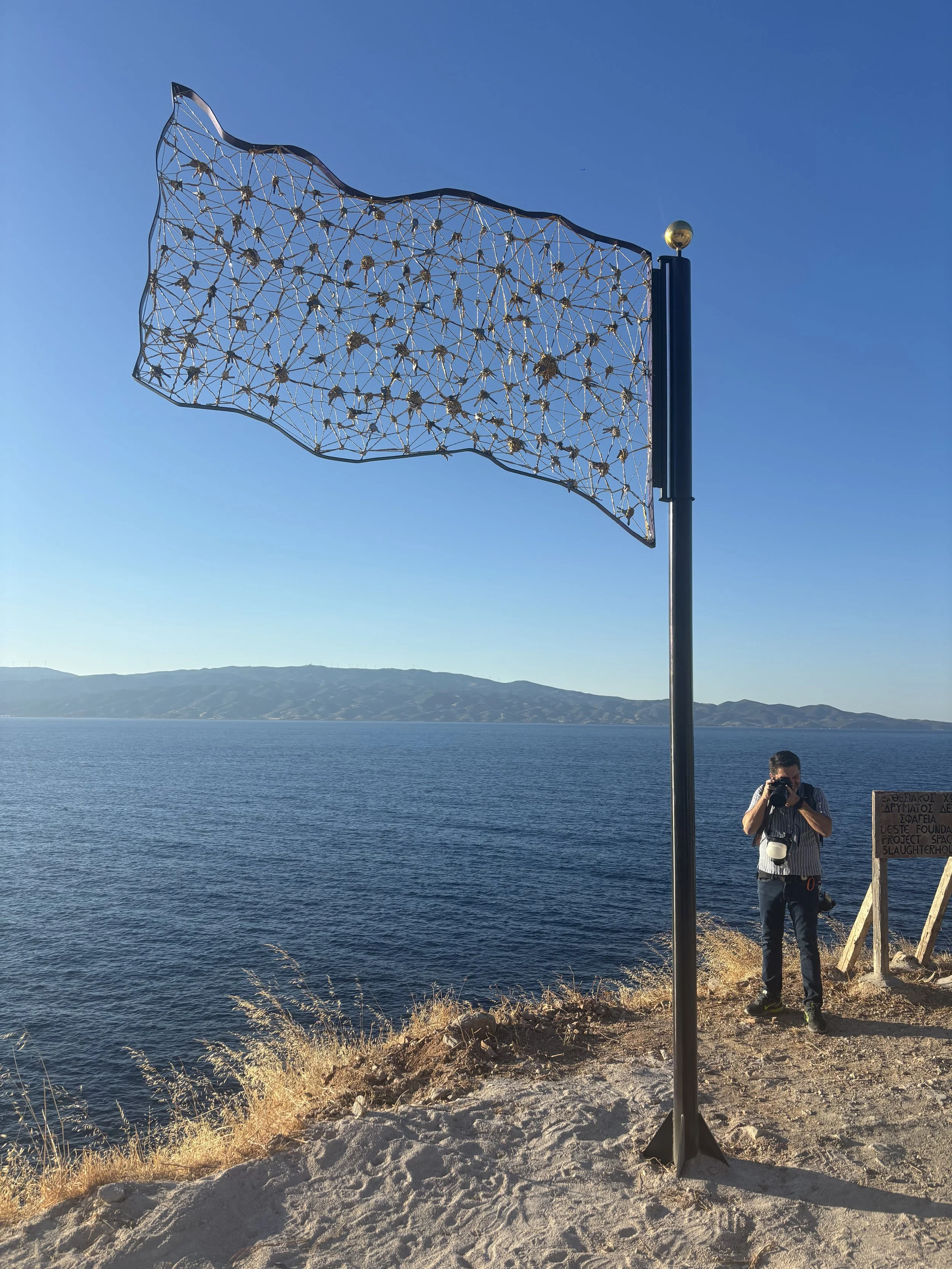
DESTE has spent more than fifteen years turning one building on Hydra into an instrument.
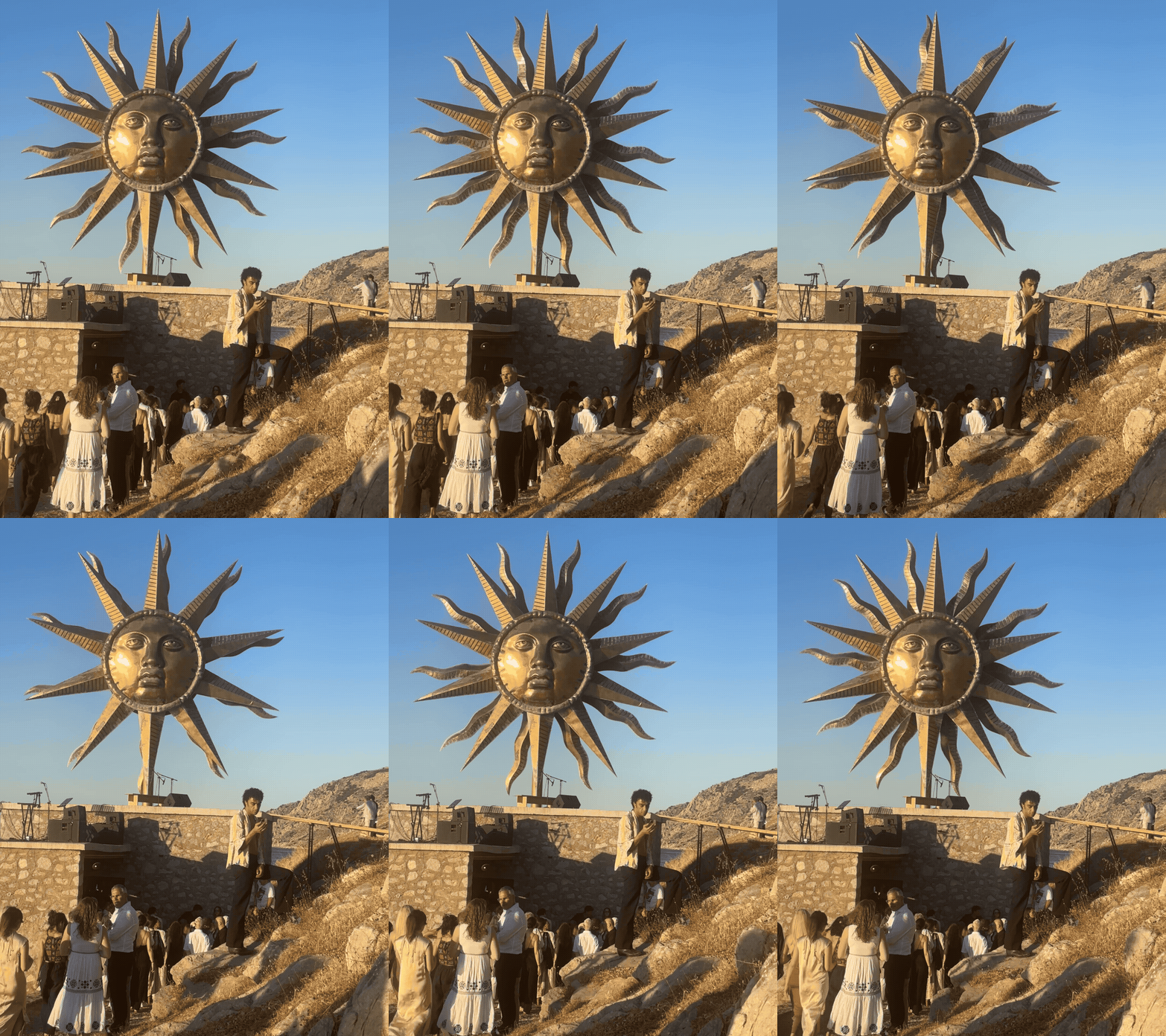
The foundation acquired the island's defunct abattoir from local authorities in 2008 and began programming it a year later, handing the space to one artist a year and asking, each time, for work conceived for the room rather than carried into it. The roster of those who accepted makes its own case for the place: Maurizio Cattelan inaugurated it in 2010, Kara Walker and Urs Fischer came through in the years after, Jeff Koons installed his Apollo in 2022 and the work has presided over the harbor ever since, and George Condo and Andra Ursuța held the two most recent summers.
Each opening is an event in itself. Once a summer the foundation manages to land a real slice of the art world on this small island, a crowd that feels outsized for so small and remote a place.
The ritual is half the appeal: it is also, this season, in pointed tension with what the room has been asked to carry. A space built for killing, for the reduction of a living body to weighed meat, now houses an argument about which bodies a country agrees to take in and which it keeps at the door.
The site states the premise before Ward adds a word.
Ward has worked this way for a long time. Born in Jamaica in 1963 and based in New York, he builds his sculptures from what a city discards and leaves at the curb, and works each cast-off thing until it begins to carry a history that was thrown out along with it. His recurring subjects are race, the economics of poverty, and the residue of what we consume. A slaughterhouse is, in its way, the largest found object he could be handed, a structure that will not let anyone forget what it used to do.
Until That Day points that practice at the African communities who have made lives in Greece across the past two centuries, a population the project means to dignify rather than merely record. Ward is explicit about his timing, as he is making the argument as nationalism hardens across much of the world and the language of who counts and who does not grows louder. His own statement refuses to hedge: the Afro-Greek presence, he writes, "makes it stronger."
The title is borrowed from a line Haile Selassie delivered to the United Nations in 1963, when the Ethiopian emperor warned that peace and a shared citizenship would stay out of reach until human beings learned to treat one another as equals, whatever their nation or race. Bob Marley set the same passage to music in 1976, in "War," and Selassie's sentence reached an audience the General Assembly never could. Ward's move is to hand the words on once more: the work seems to grasp that a refrain is absolutely not a verdict. It returns because the thing it describes has not been settled… Selassie to Marley to a slaughterhouse on Hydra is less a quotation rather than a relay, each carrier passing along a sentence that has yet to be answered.
The sharpest decision in the show is musical. Ward asked Aggelos Aggelou, a performer rooted in rebetika, together with other Afro-Greek musicians, to answer Selassie's speech in song. Rebetika is not innocent background folk. It is the sound of the Greek underclass, of the dockside and the prison yard and the hashish den, and it was shaped above all by the refugees who poured in from Asia Minor after 1922, a whole population pulled up, resettled, and held for generations at the edge of belonging. To seat the Afro-Greek present inside that lineage is to argue without a label on the wall… It proposes that Greece has already taken a music of the dispossessed and made it central to its own self-image, and that the people now waiting at the threshold are singing in an idiom the country learned by heart long ago.
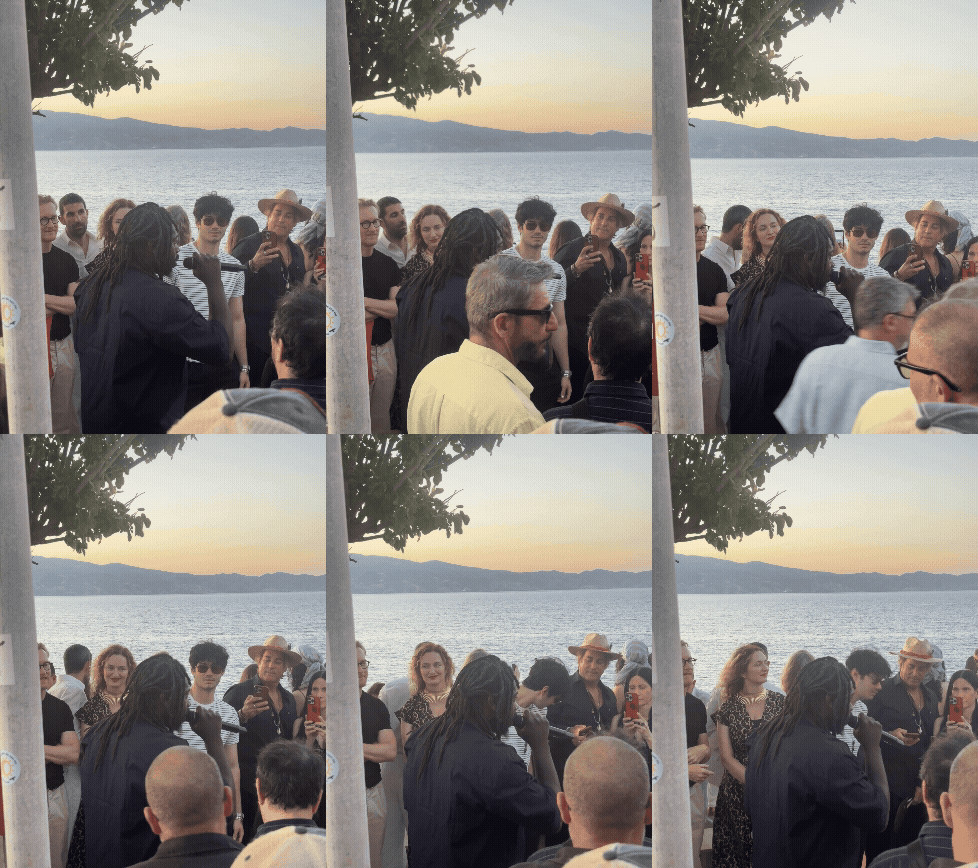
Part of the live performance was set amongst the audience.
I heard it at sunset, the Aegean behind the open end of the building doing what that sea does to anything set against it.
It would be easy to read the setting as scenery. It is not. Hydra's beauty raises the cost of the question rather than lowering it, because the island is also one of the most heavily curated surfaces in the Mediterranean, a place the art world comes to be looked at.
The voices in the slaughterhouse were aimed, in part, squarely at that audience.
That is the contradiction the show keeps rather than resolves, and it is the better for keeping it: Until That Day sets a meditation on exclusion inside one of the most exclusive gatherings on the art calendar.
It neither hides the irony nor lets it pass.
Everyone who climbs the hill is folded into the question they came to admire. So, for that matter, is this account.
Selassie's line closes on the words "never attained," and the integrity of Ward's project is that it promises nothing softer.
The refrain gets sung because the day has not arrived; what the slaughterhouse offers is recognition, NOT a resolution, sustained for the length of a song, on a cliff above the water, held open until the day it is no longer needed.
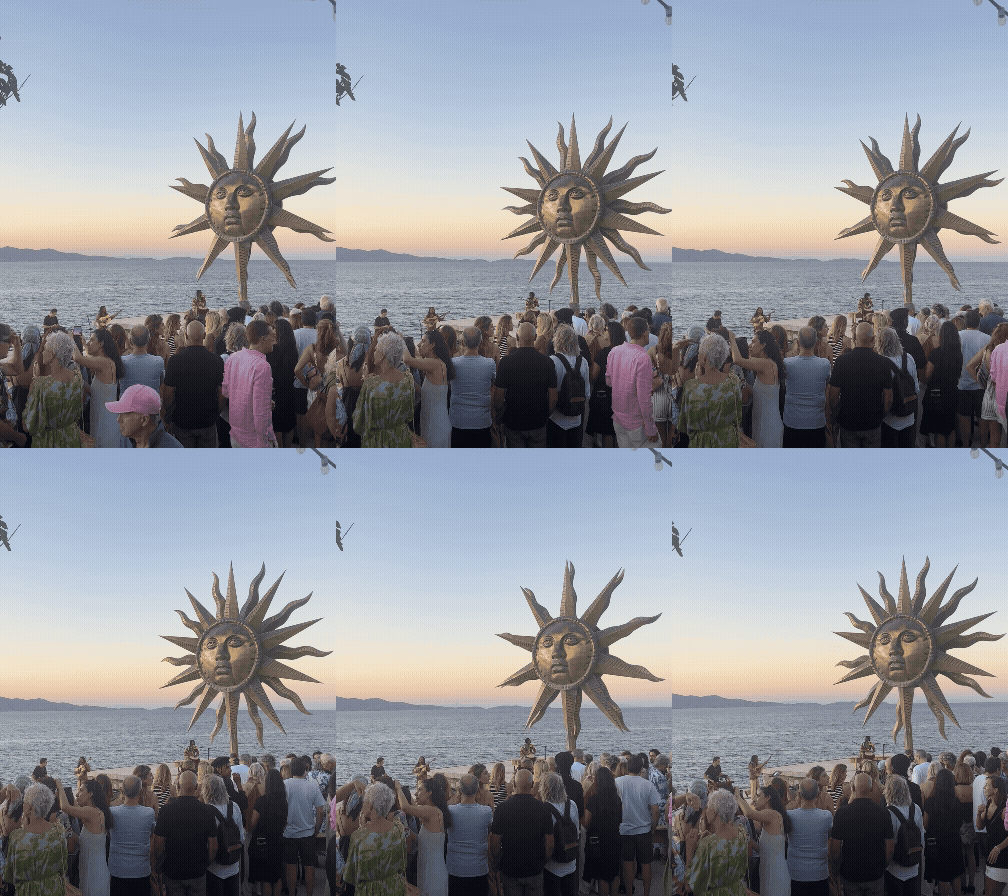
Nari Ward, Until That Day, DESTE Foundation Project Space, Slaughterhouse, Hydra.
Through 31 October 2026.