

Notes From the Aisle
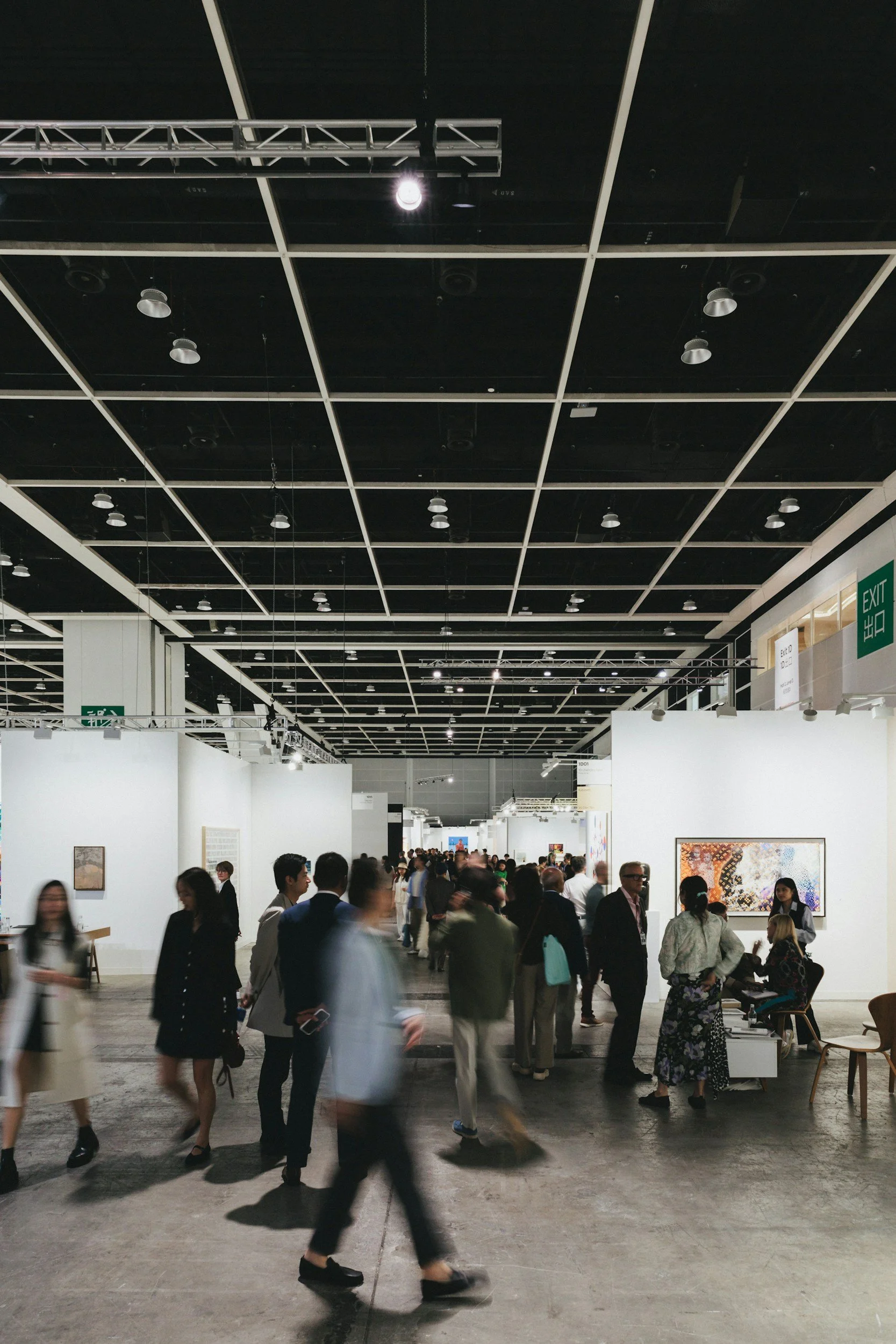
The fair calendar never really ends: Basel in June, Frieze in October, Paris Photo in November, Miami in December, and a dozen satellites orbiting each one, with gallery openings and quiet Tuesday viewings filling every gap between.
And at every stop, the same fiction is politely maintained: that there are no rules. No dress code, no protocol, come as you are.
In reality, this world runs on one of the densest unwritten codes of any industry, silently enforced and permanently remembered, and no one will ever hand you a copy. The code works like provenance: nobody brings it up until yours is in doubt.
Consider this a debrief from the aisle, written with love (and a mild headache).
What people actually wear (not what you think they wear)
Forget whatever "art fair outfit" your algorithm has been feeding you.
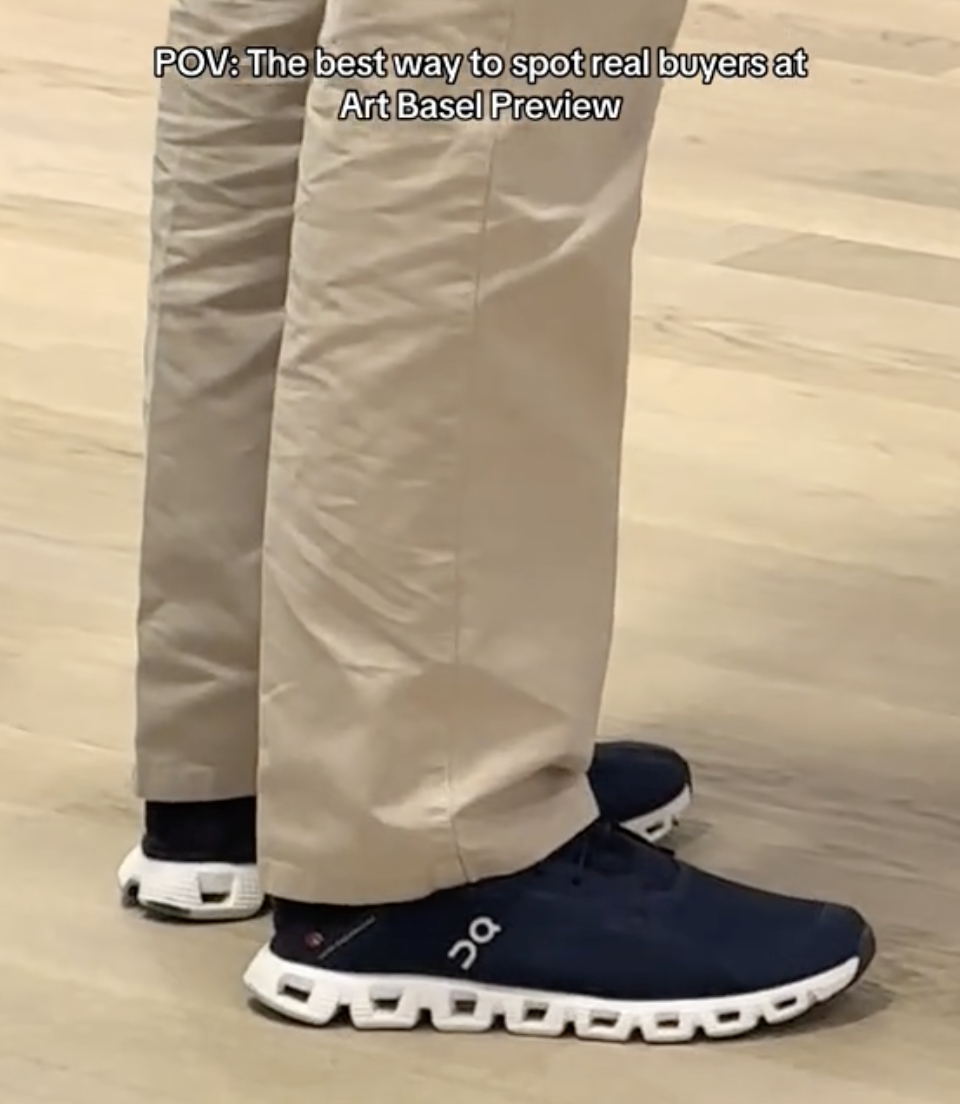
There was a trend (which later became a meme): the biggest collectors on the floor are in On running shoes. Not as a bit.
If you mean business at a fair, you dress for the eight kilometres of concrete, and the fastest way to spot someone on their first preview day is a beautiful (and uncomfortable) shoe with a heel and a face that regrets it by booth C14.
The women who live in this world are, more often than not, in midi skirts and something flowy. There is a reason the uniform converged there: it moves well, it photographs incidentally rather than desperately, and it survives the temperature swing between the champagne bar and the air-conditioned blue chip corridor. Every other person is wearing mildly quirky eyewear in the lineage of Le Corbusier, round and architectural and slightly too considered, and honestly, it works. The glasses are doing the personality so the clothes (and sometimes the people themselves) don't have to.
What does not work is costume. The full streetwear drop worn like armour, the lanyard as jewellery, the merch of your own project on your own body. If your outfit is pitching before you've said hello, everyone has already priced you. Same goes for the linen/tweed clad skeptic, touring the digital section with his eyebrows. We can see you too.
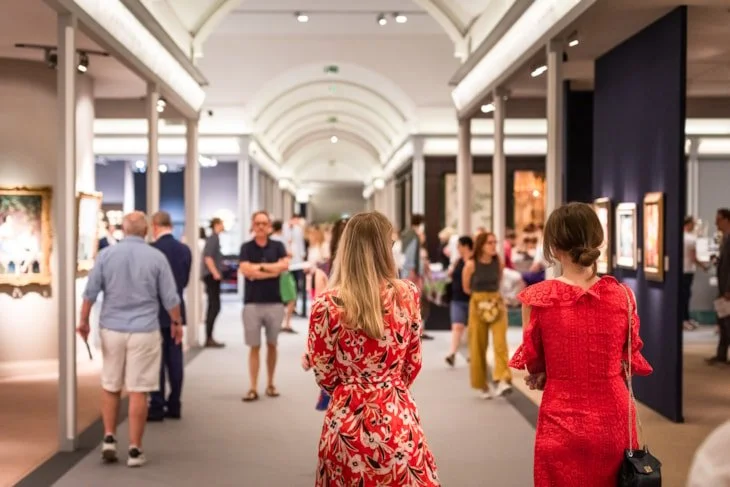
Here is the tell that separates the professionals from the tourists: the professionals stopped getting dressed years ago. They run a uniform. Five outfits that all speak to each other, decided once, repeated forever. It is minimalism practiced as a lifestyle: arrive at the form early, then commit to it for decades.
Dealers take it further and dress to lose on purpose, since nothing on their body is allowed to compete with what's on their walls. And notice which brands you can identify on the floor. Almost none, unless you know the cut. At this altitude the logo is worn on the inside.
The actual code, decoded: dress like you're heading to the back office where the invoices live, not the fair's Instagram.
The back office is where everything interesting happens anyway.
The fair starts three weeks before the fair
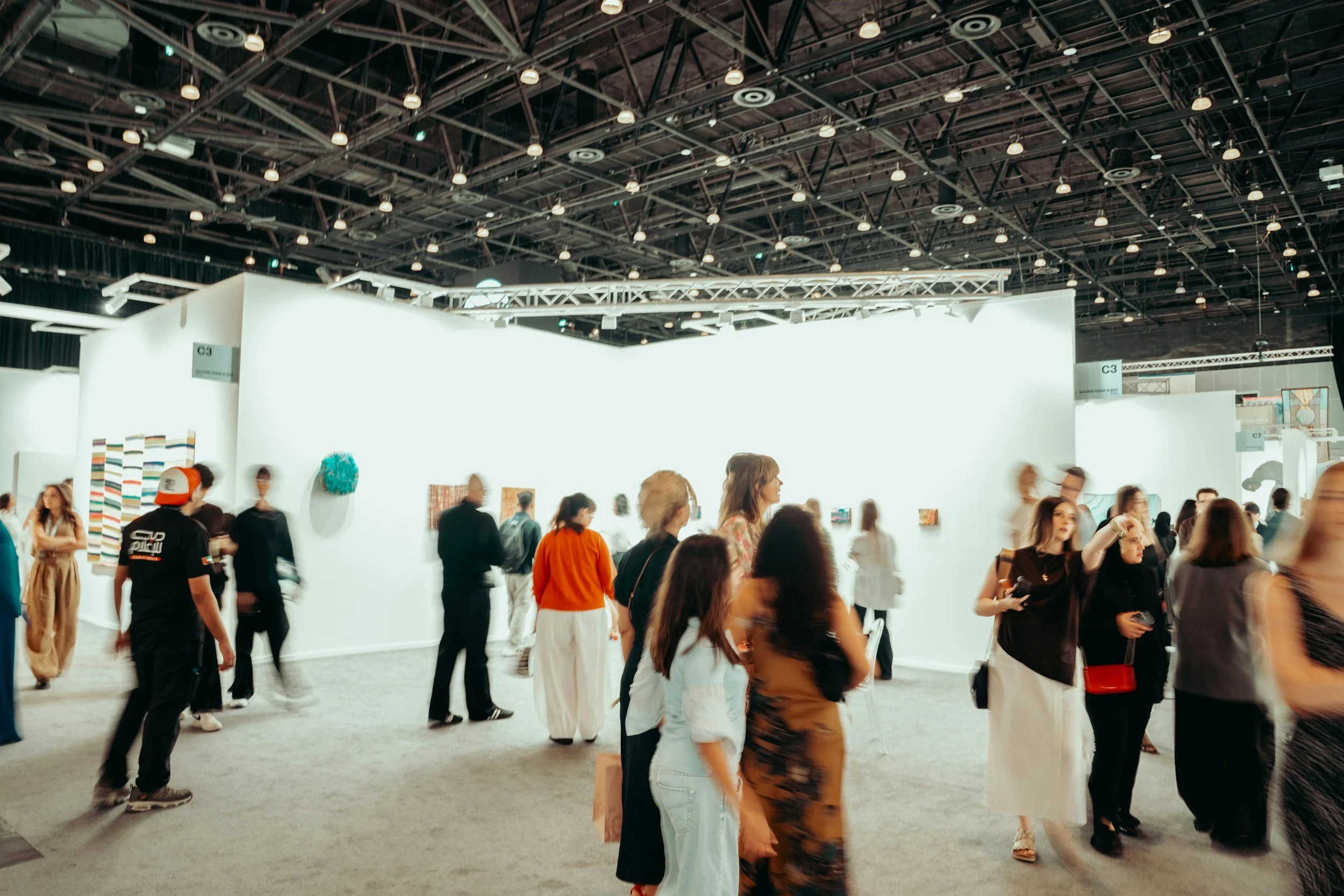
You can spot the people who winged it. They're the ones drifting, checking the app at the entrance, discovering on Thursday that the talk they wanted was Tuesday. The people who get anything out of a fair built their diary weeks out: booths mapped, meetings locked, exhibitor list actually read. Not because they're joyless, but because a fair rewards prepared curiosity and punishes too much improvisation.
The counterintuitive part is that the prepared people also do less. The amateurs try to make every dinner, every opening, every satellite party, and arrive at the main event hollowed out. The veterans pick fewer rooms and stay in them longer, because one real conversation outperforms nine hellos.
Editing, as any curator will explain to you at length, is the entire job.
Your hands. We need to talk about your hands
You know not to touch the paintings and sculptures (and if you don’t, now you do).
Somehow the knowledge evaporates in front of a screen.
A screen in a booth is not a demo unit. It is the surface of the work. Unless there is signage begging you to interact, or someone physically hands you a controller, keep your fingers in your proverbial pockets.
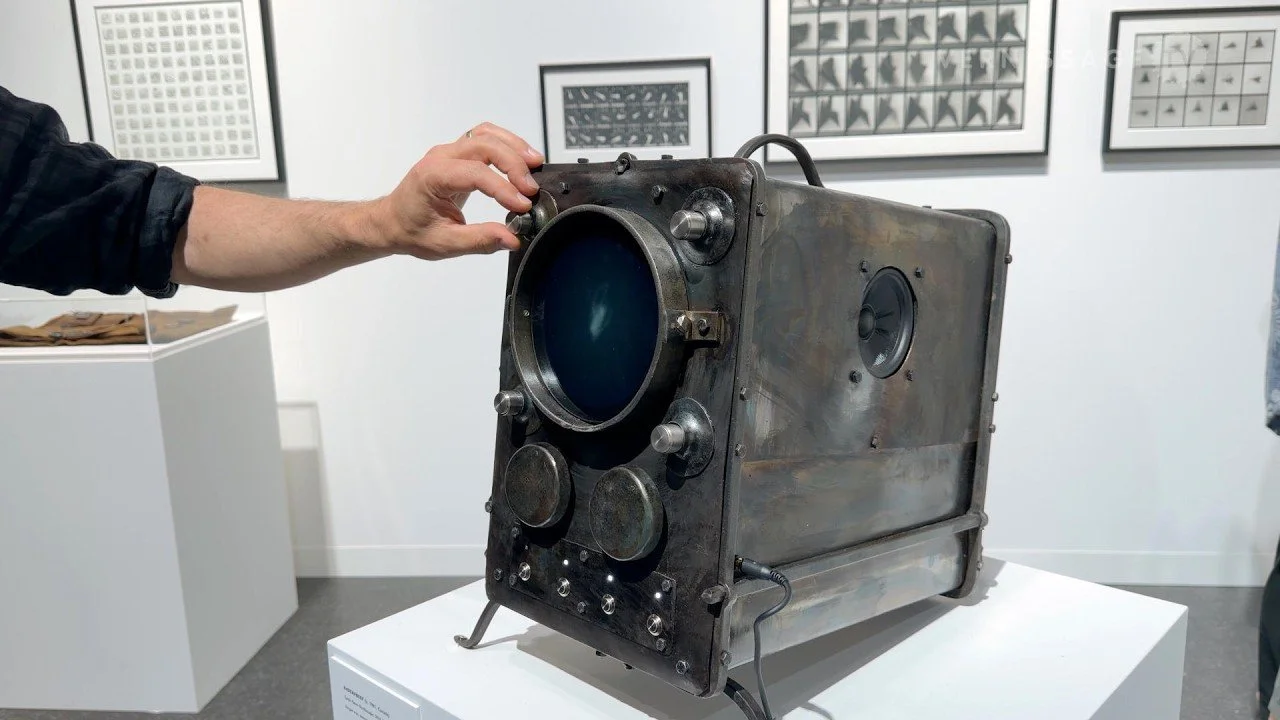
Every fair I attend, I watch someone reach out and swipe a generative piece to "see the next one," which is the same instinct as flipping a canvas to inspect the stretcher bars, except the canvas costs less to repair. When a work is interactive, believe me, the gallery will let you know. They want you playing with it. Ambiguity means no.
On this, and possibly only this, the entire industry has achieved consensus.
While we're here: the plinth is not a shelf for your Aperol, the booth walls are rented and cannot hold your weight, and your tote bag has a blast radius. Mind it.
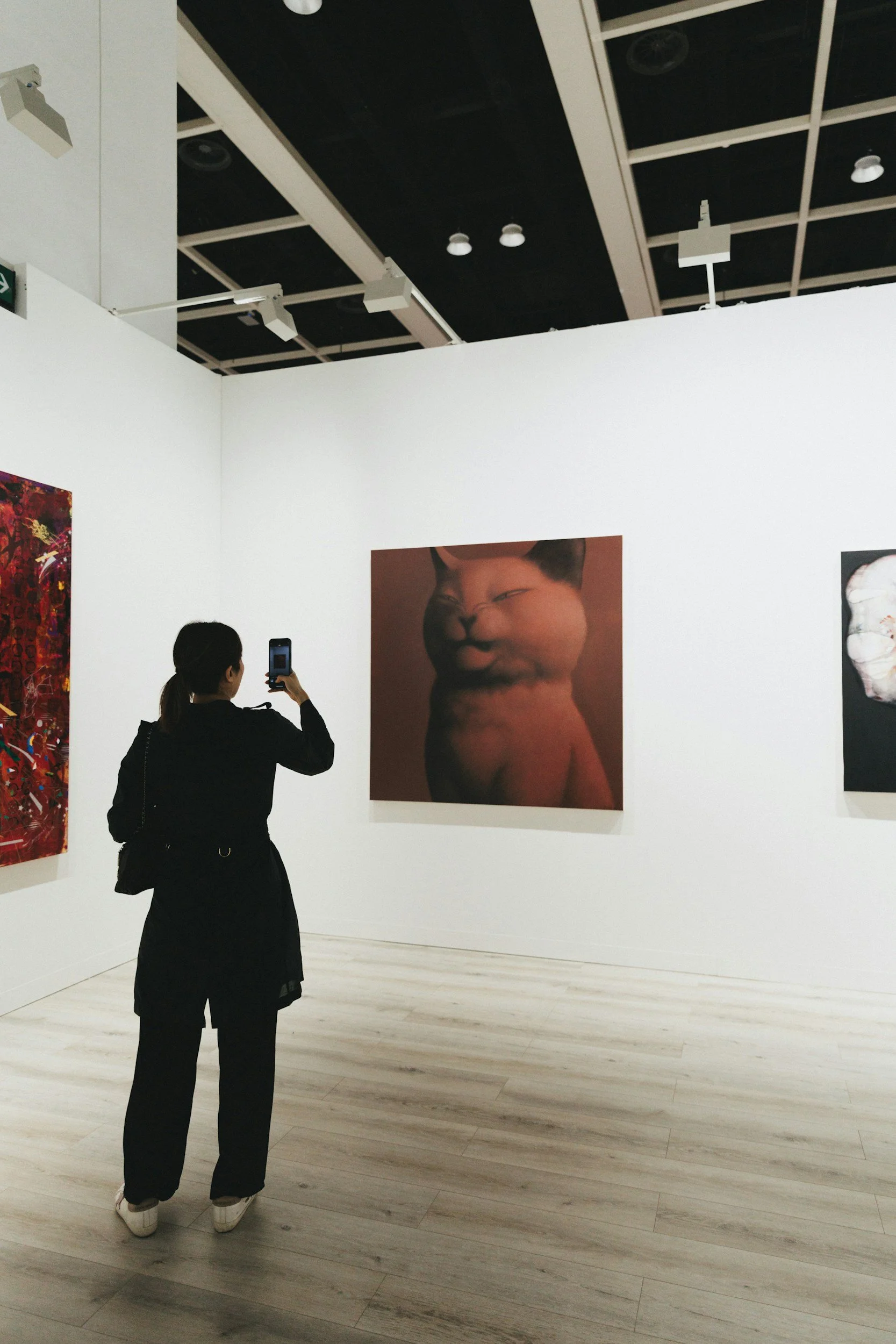
Note the comfortable shoes.
The forty-second photo
Take the picture. Note the artist. Move. The person filming a slow pan for their channel while four people wait behind them is not documenting the fair, they are taxing it.
And never, ever photograph a price list or a live sales conversation. People notice, people remember.
How to talk to the booth
Gallerists clock a time-waster in one sentence, and the sentence is "so what's the story here" delivered by someone who has looked at their phone longer than the work. The cheat code is embarrassingly simple: look first, then ask something specific. Do that and the most guarded person at the fair becomes a fountain.
Asking prices is fine.This is a shop.
What's not fine is running price checks down the wall like you're scanning barcodes, or hearing a number and editorialising. If something's on hold, "can I be second in line" is a real and respectable question. Asking who holds it is not, and nobody will tell you regardless.
Now, my Web3 darlings, a word. The booth is not a pitch surface. Nobody standing next to a Marlene Dumas wants your protocol, your platform, or your thesis on the future of ownership. Do not lead with your bags; no one in history has been seduced by a wallet address. The oldest rule in this world is that money whispers, and the person announcing their liquidity is presumed to have none. If you collect, talk about artists… NAMES, NOT NUMBERS (with love).
And to the traditionalists smirking at this paragraph: the guy in the hoodie may have out-collected you this year (also with love). You have never been able to read the buyer off the outfit. Dealers said the same thing about industrialists a century ago and were wrong then too.
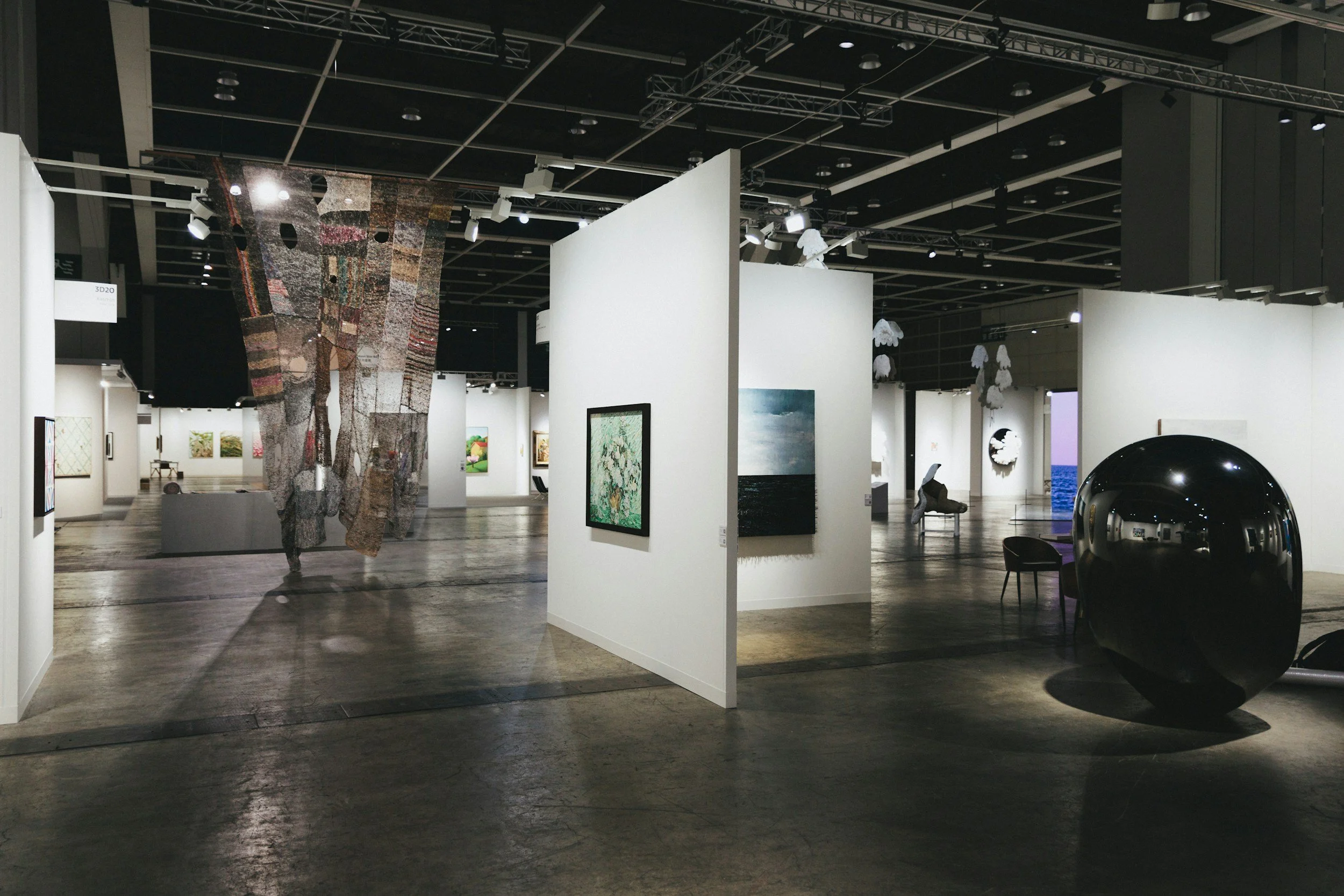
Things everybody knows and nobody says
Get out of the way. Reunions happen at fairs, it's half the point, but have them beside the work, not in front of it. The aisle is right there.
Do not perform expertise. The person loudly misattributing a painting to their date is providing free entertainment to everyone in a five-metre radius. "I don't know this artist, tell me" is the single most powerful sentence at a fair and almost nobody uses it.
Negotiate like an adult.Discounts exist. They happen quietly, often in the follow-up email, never as theatre. If you're haggling at volume, you're not closing, you're performing, and the audience is unimpressed.
Relax about the VIP tiers. Preview access is a commercial instrument, not a moral ranking. Being there on public day means nothing. Sneering at public day means quite a lot.
Eat something. The person being short with booth staff at 5pm on day three is not evil, they are running on two espressos and a canapé. The fair does this to everyone. Carry a protein bar like the professionals do.
You are on stage everywhere. Not just at the booth. The café queue, the shuttle, the bathroom line at the collector dinner. That withering assessment of a gallery you deliver over a negroni will reach the gallery, usually embellished, sometimes before dessert. The fair has no backstage. Fatigue makes people sloppy by day three, which is exactly when the wrong person is standing behind you.
The fair ends in the follow-up. Whatever happened in the aisle is provisional until the message afterwards. The collectors, curators, and dealers who seem magically well-connected are simply the ones who wrote the short, specific note within the week while everyone else was recovering. Take names, take notes, and close the loop. An unfollowed-up fair is an expensive walk.
Exit warmly. "Thank you, this is beautiful" costs nothing and buys everything. The gallerist you brush off at Basel will be seated next to you at a Frieze dinner four months later. This industry is a village wearing a metropolis costume, and the village travels together.
The one rule under all the rules
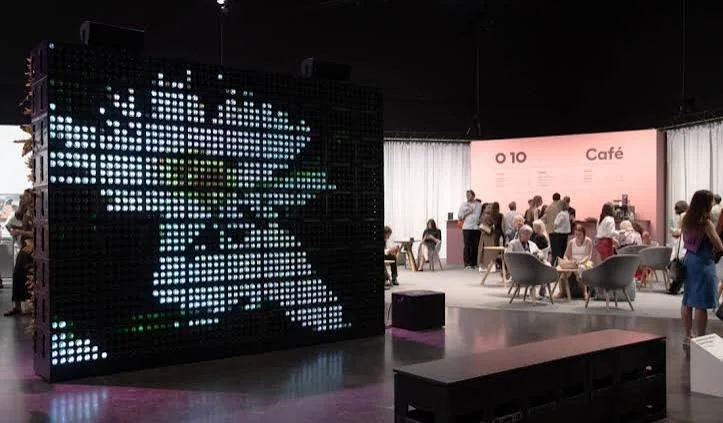
Everything above is a single instruction wearing different outfits: don't steal attention that belongs to the work or to other people.
Etiquette, like conservation, is mostly the discipline of not leaving fingerprints. The old guard encoded it in quiet clothes and quieter money. The digital crowd is still drafting its version. Both fail constantly, in their own dialects, and the fair forgives almost everything except pretending you didn't know.
Look longer than you talk. Touch nothing. Ask better questions. Wear the On runners.
You belong there as much as everyone else.