

LoVid: Signal, Thread, and Ground
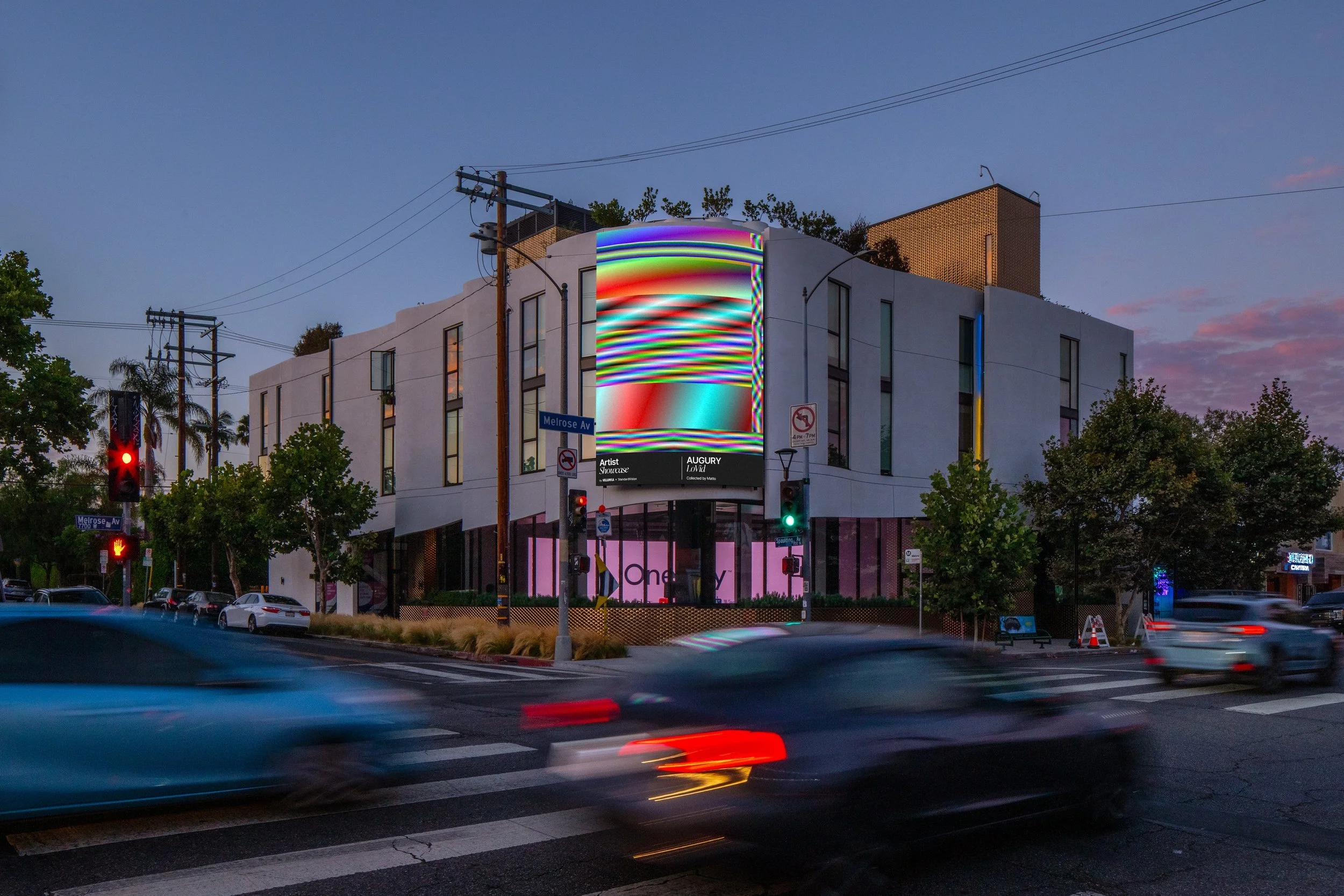
When Art Basel announced the line-up for Zero 10 in Miami Beach, one name on the list carried twenty-five years of history with it.
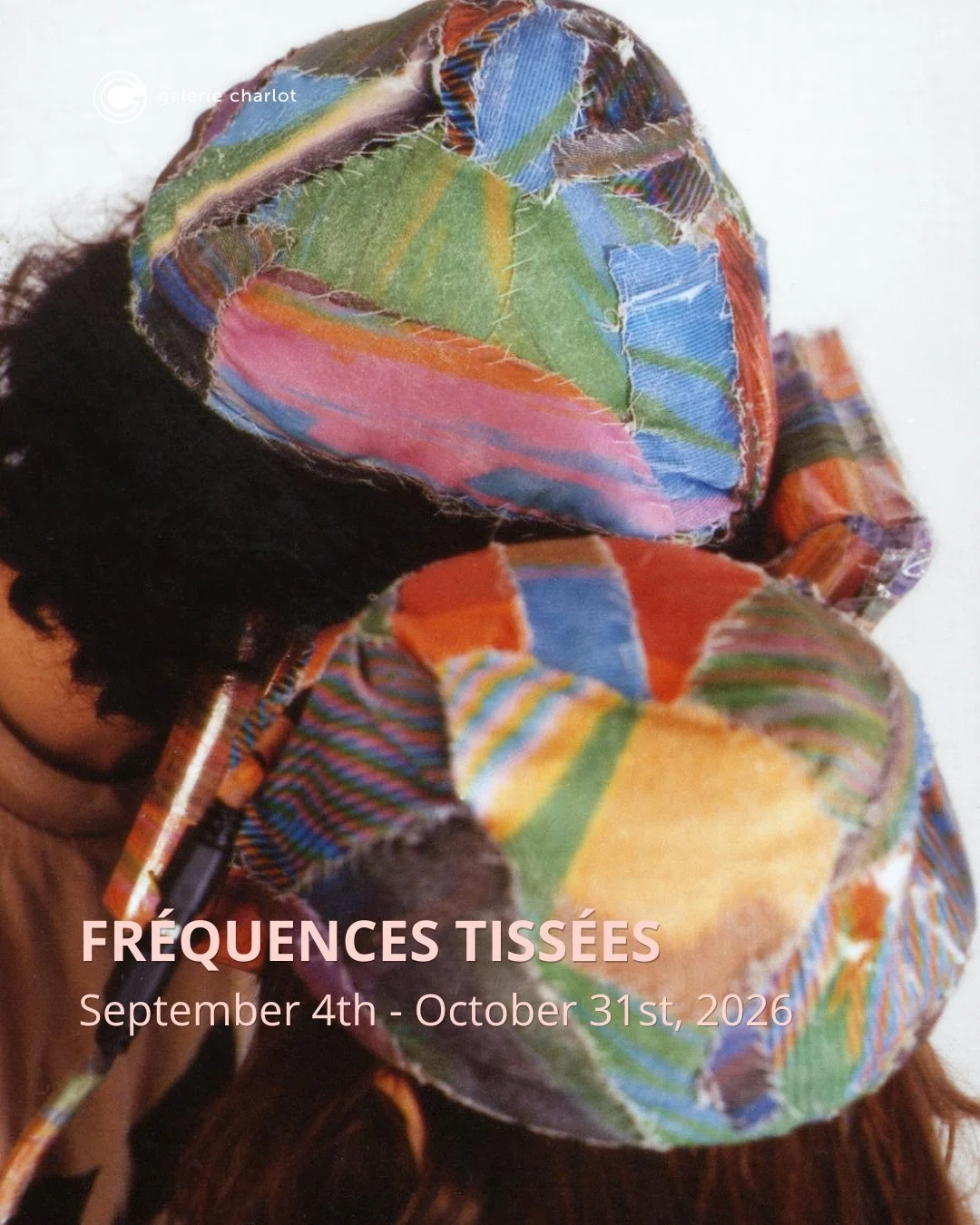
LoVid, the New York duo of Tali Hinkis and Kyle Lapidus, is presented by galerie charlot, the Paris gallery that also gives them a solo exhibition this year.
Hinkis trained at the École nationale supérieure des Beaux-Arts in Paris. Lapidus studied at Harvard and went on to an MD and PhD. They have worked together as LoVid since 2001. In that time they have made videos, handbuilt synthesizers, wearables, textile paintings, performances, stained glass, works on paper and on-chain generative art, without ever settling into one of them.
That refusal is the story. LoVid were working across signal, body, fabric and code long before "interdisciplinary" became a line in a press release. Their arrival at Art Basel is a good moment to look at how early, and how consistently, they got there.
Owego, 2003
The foundation was laid in a small town in upstate New York. In 2003, LoVid were in residence at the Experimental Television Center in Owego, one of the key American sites for video image processing since the 1970s. There they made five videos: Quilt, Susquehanna, Cyclops, Decay Hatching and Breaking and Entering the Lost Timeframe.
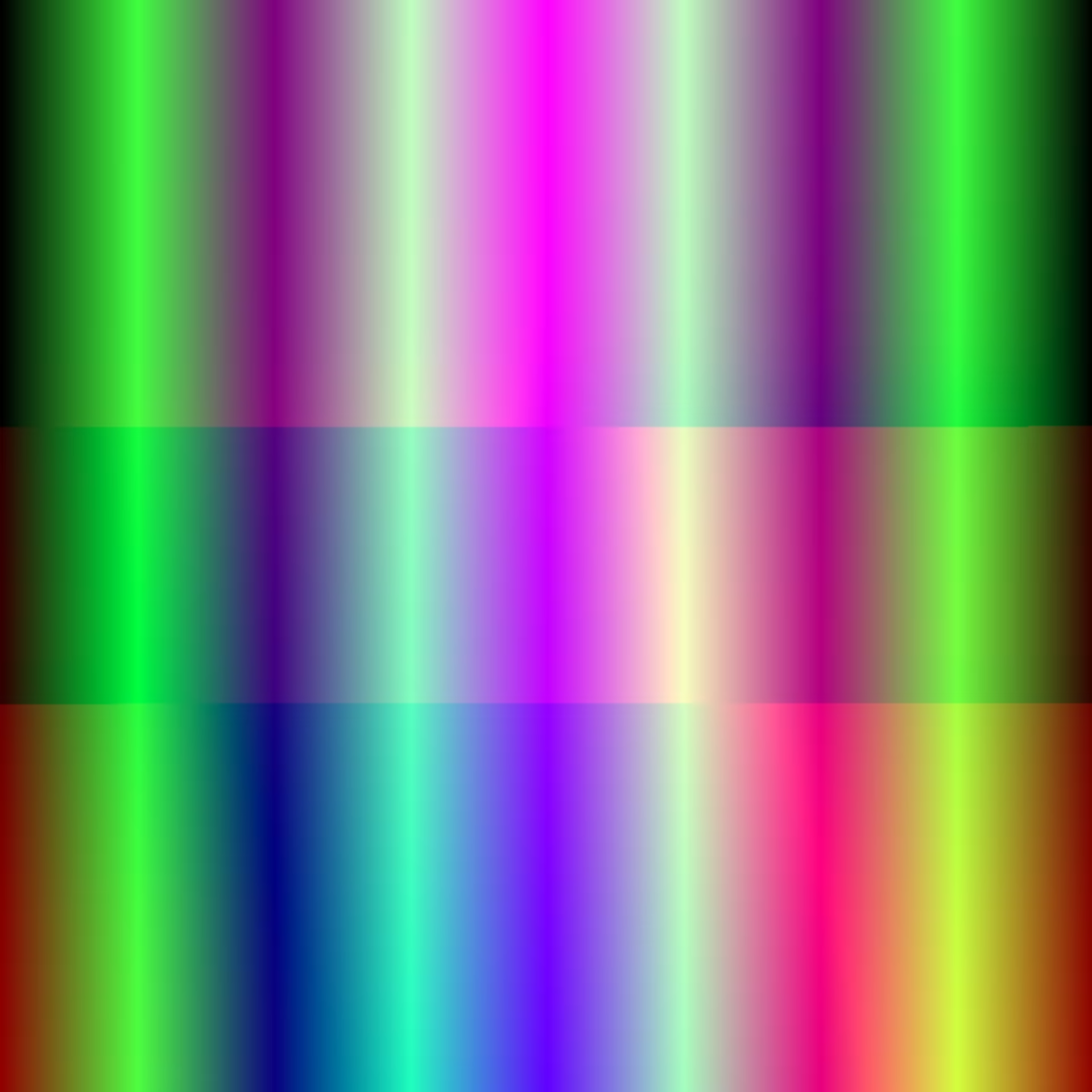
The method was radical in its simplicity. The works are built from analogue electrical current, used at once as visual and sonic material, so that discrete sound and video signals act on each other inside a single system. The results are fields of vibrating colour, scanlines and rhythmic breaks that hover between motion and stillness. Cyclops resolves into an eye-like form, a lens of green and magenta floating on black. Decay Hatching is a slab of orange and green rasters torn at the edge by cyan.
In a 2024 conversation with Gregory Zinman for Leonardo, Lapidus named Dan Sandin's Image Processor as a crucial reference point, and Hinkis spoke of stripping away the original photographic image until "the image processing becomes image creation." The phrase, which gave the interview its title, is exact. In these videos, the processor is the source.
The same year brought a first solo show, Electricity Is Fun When LoVid Plays Synchro at SOUTHFIRST in New York, a performance at Deitch Projects, and inclusion in Radical Entertainment at the ICA in London, curated by Lauren Cornell. Twenty-three years later, Picture Theory in New York is showing the 2003 videos again as Hotter Than The Sun, each in an edition of three.
Building the instrument
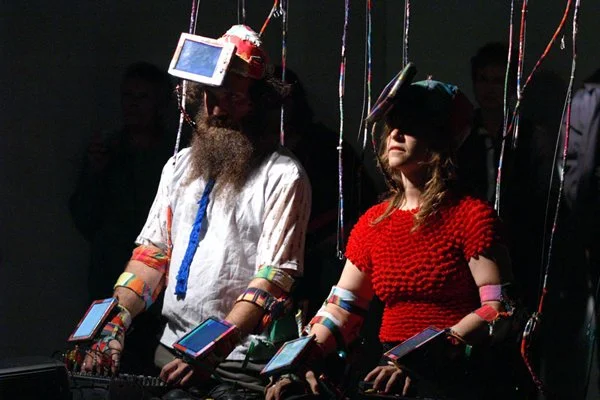
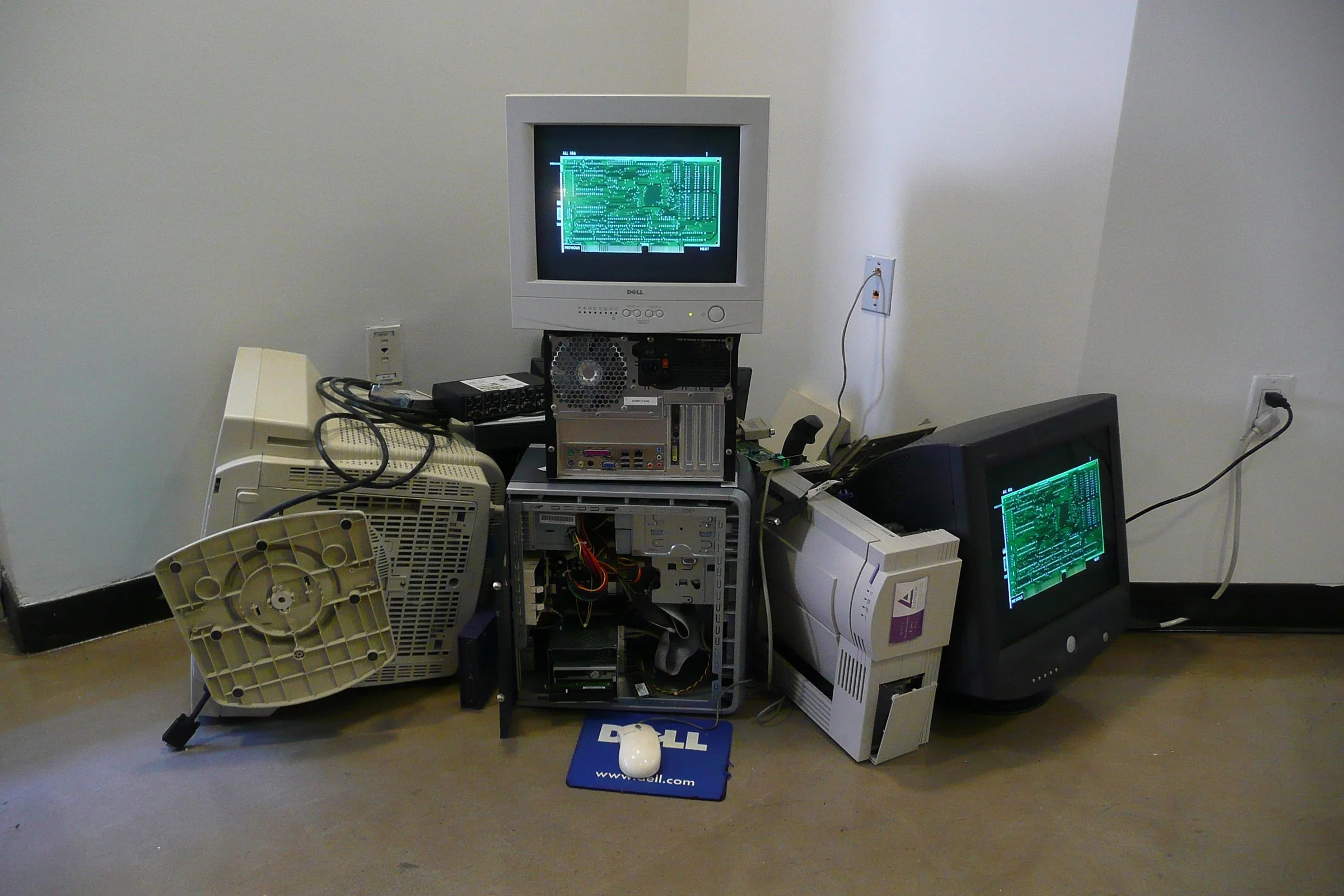
LoVid did not stop at using other people's machines. From the start they built their own: sculptural synthesizers that generate sound and image together, and that are artworks as objects as well as instruments. Works with titles like Sync Armonica and Dragon Slayer moved through the experimental music and media circuits of the mid-2000s, from Deitch Projects and The Kitchen to Rhizome's Craptops Vs. Laptops night in Brooklyn and the Kraak festival in Belgium.
The record shows how seriously that hardware practice was taken. LoVid appear in Nicolas Collins's Handmade Electronic Music: The Art of Hardware Hacking, the standard text on the subject, and in Leonardo Music Journal. Douglas Repetto, a collaborator on several of their projects, wrote "Illuminated Circuits" for Make magazine in 2007, bringing the work to a readership of builders and hobbyists. Residencies followed at Eyebeam, Harvestworks and STEIM in Amsterdam, the Dutch studio built around electronic instruments for live performance.
In 2008 they performed Video Fingerprinting at MoMA's Modern Mondays. By then the core of the practice was clear: if the tools shape the image, the artist should make the tools. It is the same conviction that generative artists would later express in code, arrived at with a soldering iron.
The body as interface
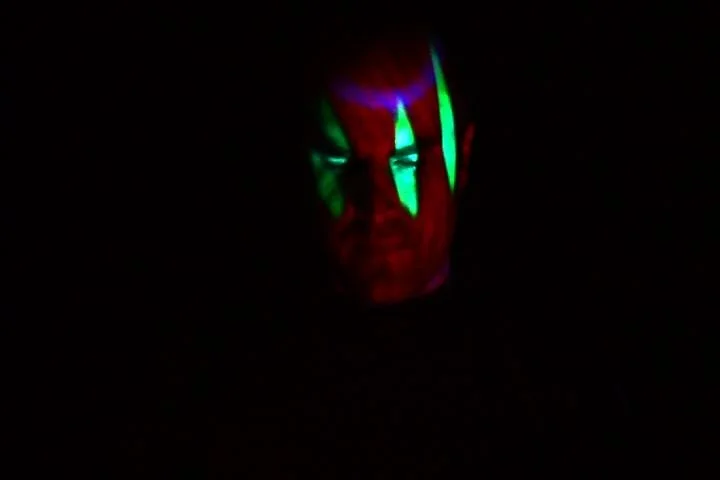
If signal was the first material, the body was the second. LoVid's own description of their practice centres on the points where technology seeps into human culture and perception, and they have tested that idea on actual bodies for two decades.
Coat of Embrace travelled from FACT in Liverpool, to the International Film Festival Rotterdam. Hack Your Face was presented at Eyebeam in 2009. Reaction Wear turned the duo's imagery into garments and performances, then into workshops in Busan, Daegu and Seoul. In 2017 Paddy Johnson wrote a piece called "How To Wear Video" about them; a year later their wearables appeared in Cosmopolitan. Few media artists can claim both a MoMA performance and a fashion feature.
The body in LoVid's work is also a social body. iParade #2 (2012) was a participatory walk with Elastic City. Recent titles circle around touch: Hold On at Postmasters and Huggez-Vous in Chicago, both 2022, and Hugs on Tape (Gene/Susan) at RYAN LEE in 2023. The pair have also been candid about making art while raising a family, a subject addressed in The Let Down Reflex, the touring exhibition curated by Amber Berson and Julia Driever that includes their work.
The thread
One of the 2003 videos is called Quilt. It is a grid of patches, each a different interference pattern, stitched together in time. The title was a signpost. A video frame is drawn line by line, and a weave is built thread by thread; LoVid have spent two decades moving between the two.
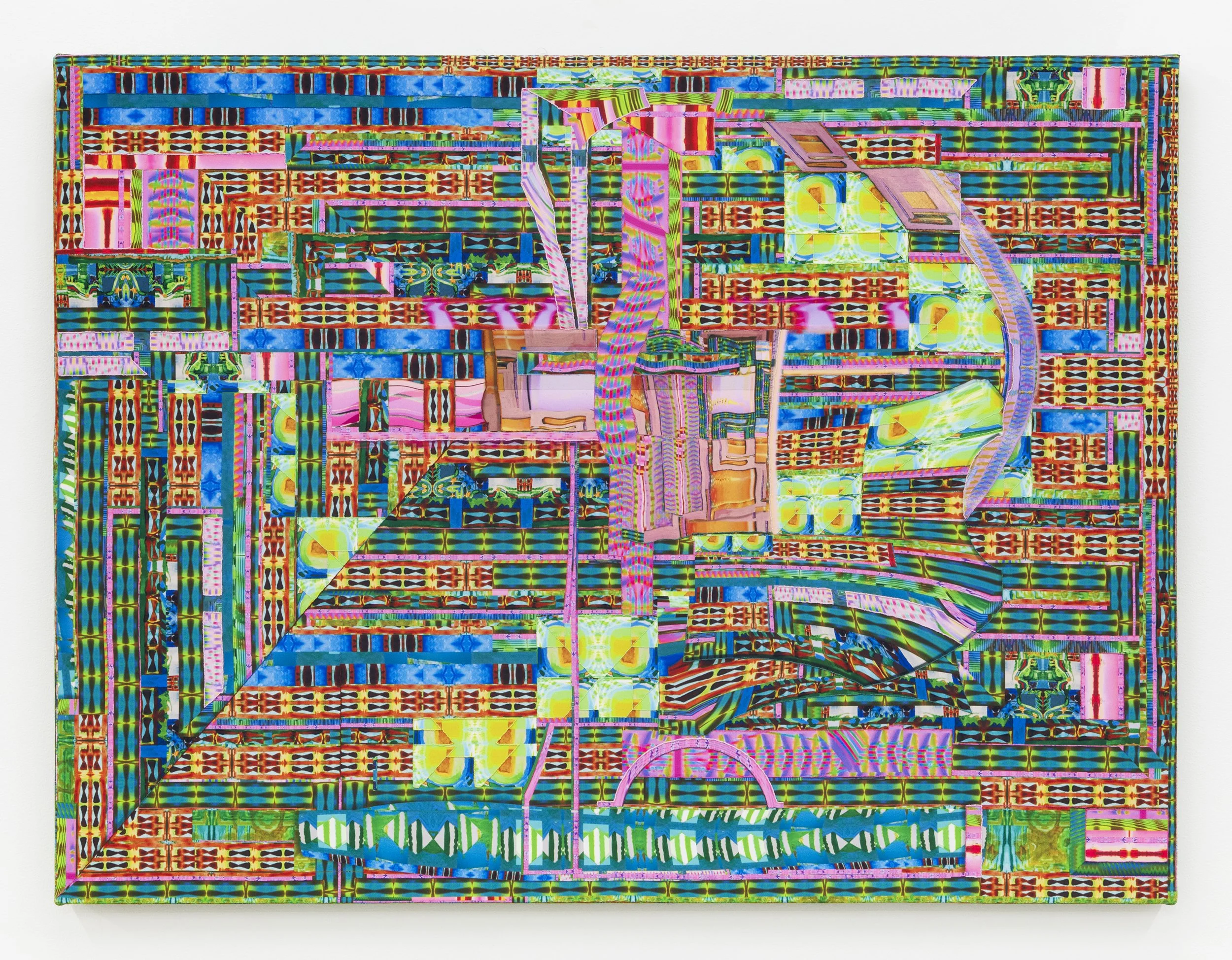
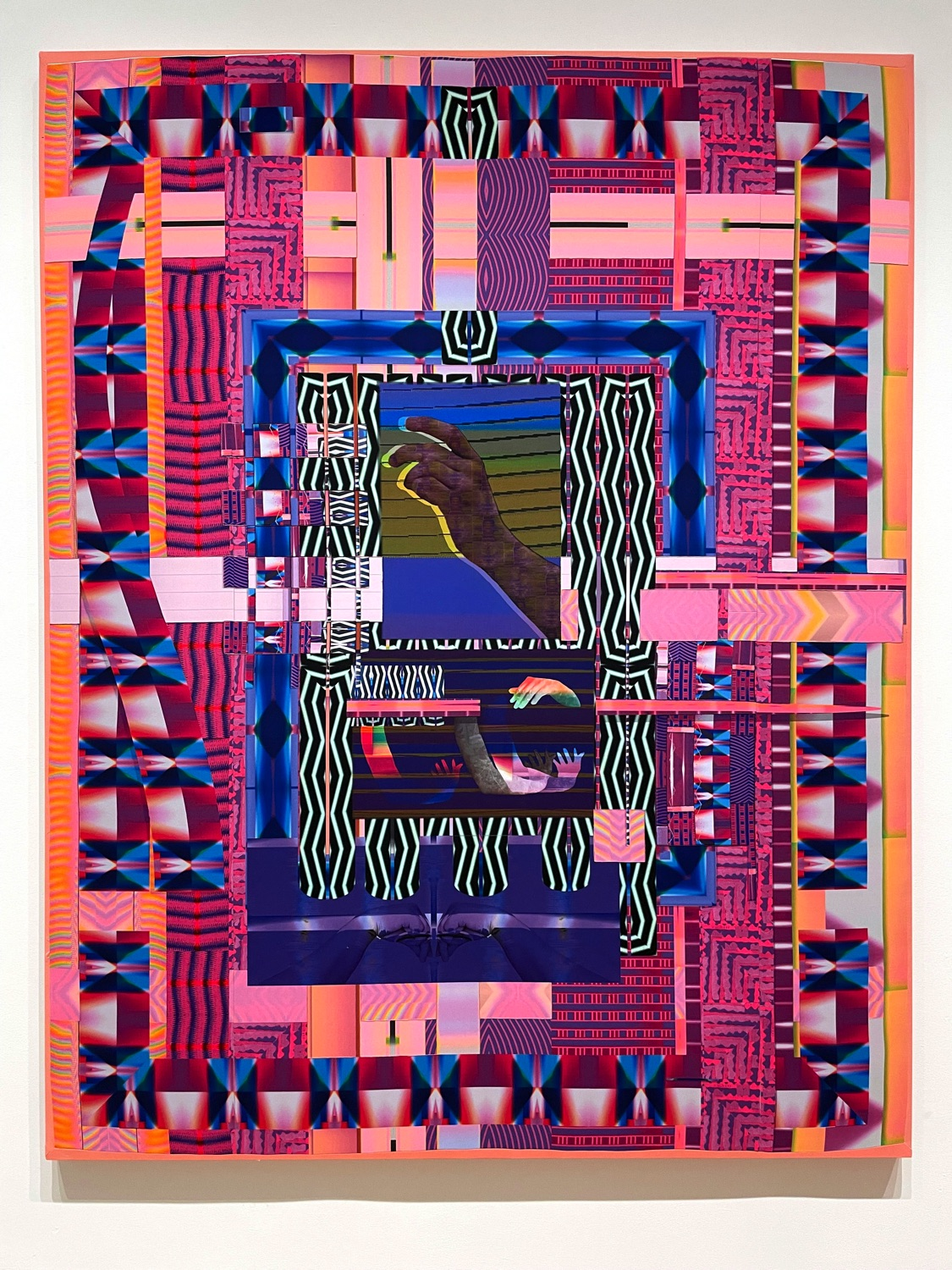
The textile thread appears early in the record. They featured in the craft magazine KnitKnit in 2004. Over the following decade came textile paintings and sewn works, shown in exhibitions such as Tailored: Stitched, Patched, Pinned (2015) and Handmade Abstract at BRIC House (2015). In 2017 Hyperallergic reviewed their work under the headline "Artworks Woven on the Loom and in Looping Video," which says it plainly. Glenn Adamson, one of the leading historians of craft, wrote about them in OUTLAND in 2022.
The recent exhibitions make the thread explicit: Stitch! in Boston (2022), The Golden Thread: New Adventures in Textile Art in New York (2024), and Threaded Frequencies at Gazelli Art House in London (2025), with Interweave to follow there this year. Frequencies and threads, signal and fibre: for LoVid they have always been the same subject seen from two sides.
Ground
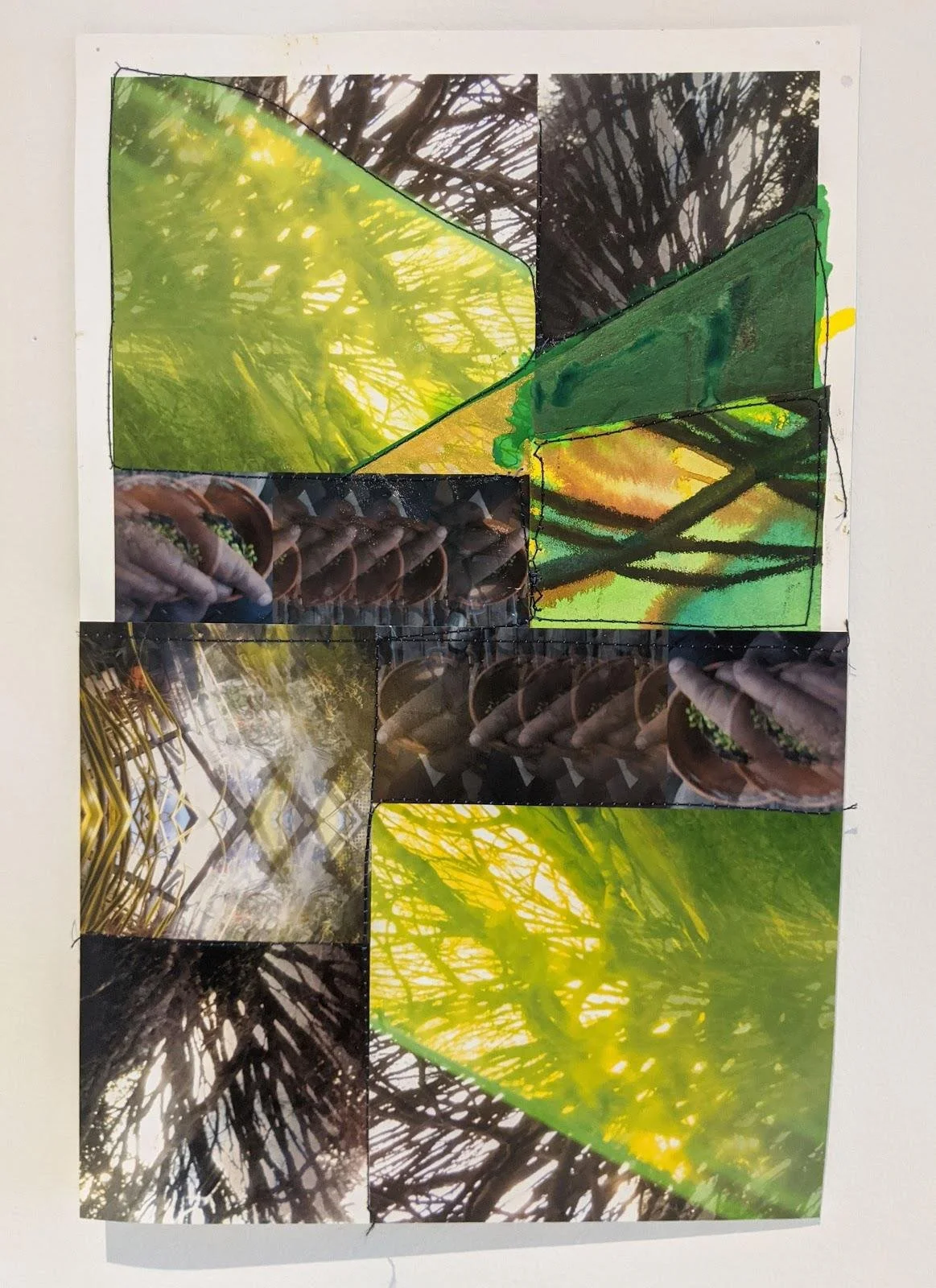
Read the titles of LoVid's solo exhibitions in order and a landscape appears. Reversible Strata Threshing (2006). Rural Electrification (2010). Roots No Shoots (2013). Tephra Garden (2015), named for the fragments a volcano throws into the air. Tap Root at Wave Hill (2023). Tide Predictor at the Museum of the Moving Image (2024). Mycotechnology: The Work of Wires in the Age of Secondary Decomposition (2025), whose title turns Walter Benjamin's essay on mechanical reproduction toward fungal decay.
This is the least discussed side of their practice and perhaps the most consistent. Picture Theory's text on the 2003 videos already links the sensory limits of video to their parallels in the natural world. In 2005 the duo appeared on the double CD Music for Plants. In 2019 they were visiting artist researchers at the Cheadle Center for Biodiversity and Ecological Restoration at UC Santa Barbara, and in 2020 they held the winter residency at Wave Hill, the public garden in the Bronx.
Where much media art imagines technology as a world apart, LoVid keep returning it to soil, water and geology. Wires decompose. Signals oscillate like tides. The electronics are treated as one more natural system among others.
On chain, on their own terms
When generative art moved onto the blockchain, LoVid did not have to reinvent themselves to follow. In 2022 they released Tide Predictor as an Art Blocks Curated project. Two years later it became a solo exhibition at the Museum of the Moving Image, an unusually direct path from an on-chain release to a museum gallery.
The crossing worked because the logic was already theirs. A generative system is a set of rules producing variations, and LoVid had been building rule-driven systems in hardware since 2003. In 2023 Right Click Save published Corinna Kirch's essay on their work, "Pattern Anarchy and the Promise of Old Media." The same year, Alex Estorick included them in Pixel Generation at Unit London.
The on-chain work has continued alongside everything else. heartsleeves, made with the musician Ka Baird, was performed at ISSUE Project Room and released on tonic.xyz in 2024. Their work is held by Le Random and the Museum of Nordic Digital Art as well as the Whitney, and it has appeared in museum surveys of algorithmic and optical art, including Infinite Images at the Toledo Museum of Art, curated by Julia Kaganskiy, and Electric Op at the Buffalo AKG, curated by Tina Rivers Ryan. Few artists sit as comfortably in both collecting worlds.
Twenty-five years in every medium
LoVid's list of media reads like a whole department: immersive installation, sculptural synthesizers, single-channel video, textile paintings, digital objects, mobile media cinema, works on paper, performance, stained glass. What holds it together is a signature they describe as density of colour, pattern and texture, broken by disruption and noise. You can see it in a 2003 frame from Decay Hatching and it runs through their recent textile work.
That consistency is the real measure of their innovation. LoVid arrived early at a way of thinking about signal and pattern, and each new medium became another place to test it. Rule-based image systems and wearable media were present in their practice years before those terms organised a market, and when on-chain art arrived they met it with a practice already built for it.
Zero 10 has titled this edition Generation. Few artists on the list can show the long arc of that word as clearly as a duo who generated images from electrical current in Owego in 2003 and released a generative project on Art Blocks in 2022. Galerie charlot has not yet announced which works it will bring to Miami.
Whatever it shows, the booth is a chance to see digital art's history and its present made by the same two hands, or four.
Sources
LoVid, complete CV (June 2026), supplied by the artists
Picture Theory, LoVid: Hotter than the Sun, 2003 Videos (exhibition document)
Gregory Zinman, Tali Hinkis and Kyle Lapidus, "When Image Processing Becomes Image Creation," Leonardo (MIT Press), 2024
LoVid’s videos are distributed by EAI https://www.eai.org/artists/lovid/titles