

The refusés
Jeni Fulton reads Zero 10's first day as an identity crisis. It is something older, and more familiar: a new collecting class buying its way toward permanence, one recognizable object at a time.
Ms Fulton's account of Zero 10's return to Basel is, on the facts, hard to fault. OpenSea, the marketplace that believed in the section first, has stepped back; Trevor Paglen and "The Condition" are in. The blue-chips imported to dignify the section : Gursky, Steyerl, Singer, Cohen's AARON canvases, sat out the first day's sales, while the section's natives moved at modest prices. Fifty-one percent of high-net-worth collectors bought something digital last year; digital, film and video together still account for three percent of dealer value. Plenty of buyers, little spend, all true, all useful.
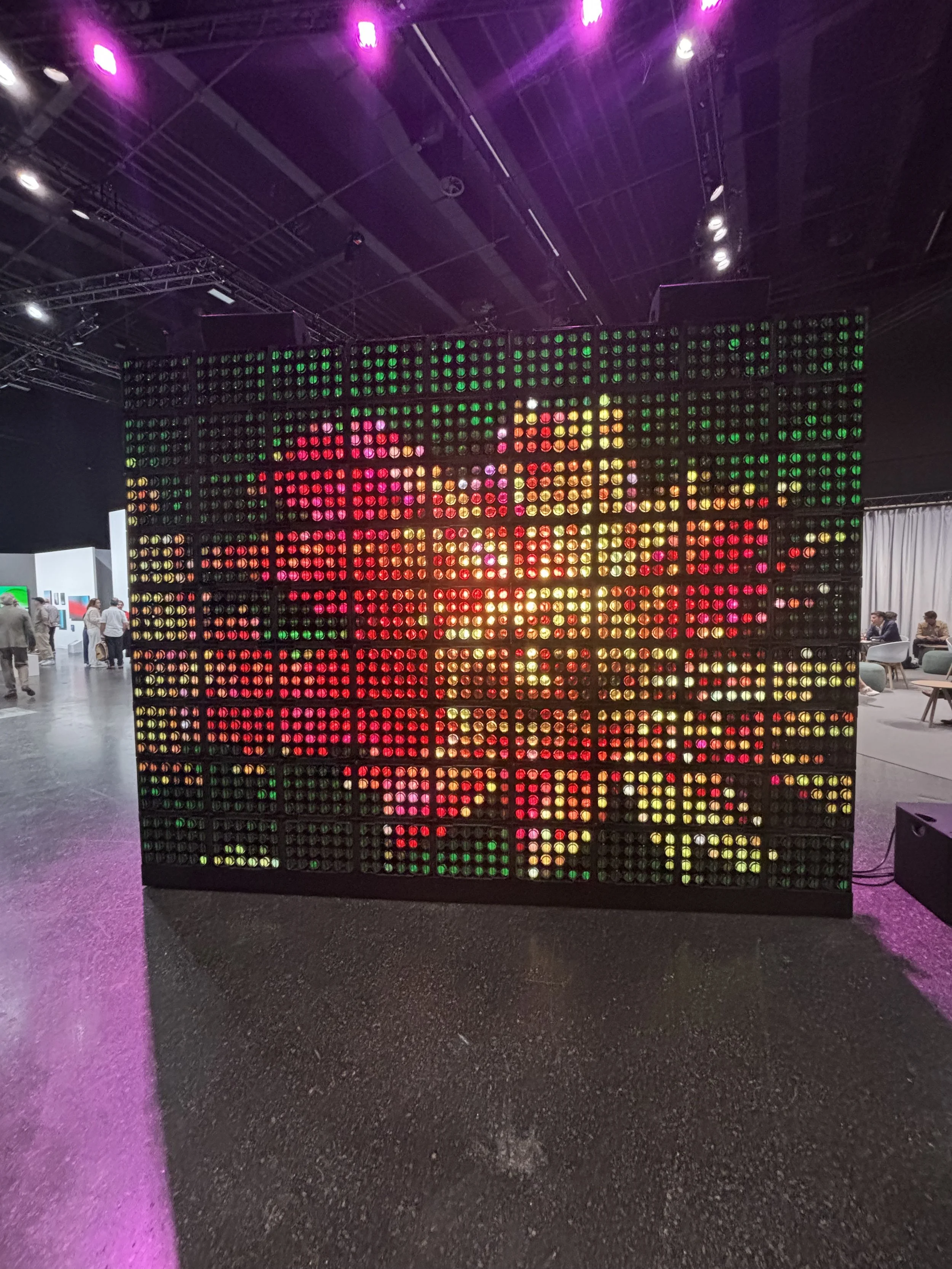
What I cannot follow is the frame. Fulton tallies the day as a contest: native artist against imported blue-chip, Web3 collector against the Ukrainian foundation and the significant American collection that took the Gerrard and the Lozano-Hemmer. She scores it, finds it lopsided, and concludes that Zero 10 does not know what it is for. But Paglen's entire premise is that the divide between digital and not is a fiction worth dissolving. To then read the floor as a scoreboard of digital versus traditional is to rebuild, in the reporting, exactly the wall the curation set out to take down, and then to fault the section for failing to resolve a war the article itself insists on narrating.
There is a much older way to read a room like this, and it does not end in crisis.
Let’s go back a few hundred years.
When Florentine merchants and bankers began commissioning the painters we now call indispensable, they were new money in a culture that still ran on older claims to status. The Medici were bankers before they were anything grander, and the worldliness of their wealth was precisely what made it suspect: to the city's moralists, to its sumptuary anxieties, to the families who had been somebody for longer. The merchants did not answer that suspicion with abstraction, they did, in fact, answer it with the altarpiece, the chapel, the recognizable and durable form, into which they smuggled their faces and their worldly confidence and, eventually, their permanence. The canon did not break under the weight of new money, it widened to seat it.
It is worth saying plainly what Fulton hurries past in half a sentence. OpenSea didn’t simply stumble into Miami Beach; it backed a digital section at the world's largest fair when the going wisdom held that this work draws crowds and no money; and it was right. That conviction is the reason there is a Zero 10 to curate at all, and that is essentially, what a patron is.
Patrons, though, seldomly stay for the canonization: the Medici bank did not outlast its century, unlike the chapels they commissioned.
A patron's legacy is never its own permanence, it’s rather what survives it. So OpenSea stepping back is not an embarrassment the section has outgrown, as the swap is so often told. It is proof the wager worked: the room it paid to open is still open, and now stands without it. That was always the bet: not to keep the marketplace at the head of the table, but to get the art seated at all.
This is the light in which I would read Fulton's most damning detail. She offers 0xDEAFBEEF's forty-thousand-dollar piece: forged iron, steampunk-adjacent, "with the code bolted on", as a tell: proof that what actually sells here is an object, not the screen-native work the section trades on.
I would call it the merchant's altarpiece. The hybrid form is not the compromise; it is the vessel. New sensibilities have always entered the durable market by arriving in a shape the market already knows how to keep. The code bolted onto the iron is doing exactly what the donor's portrait did in the corner of the sacred scene: buying a future by entering through a recognized door.
And if the question is whether the institution should be building a separate room for any of this: Fulton's closing provocation, why have a dedicated sector if all contemporary art is digital anyway, then the answer is the one 1863 already gave us.
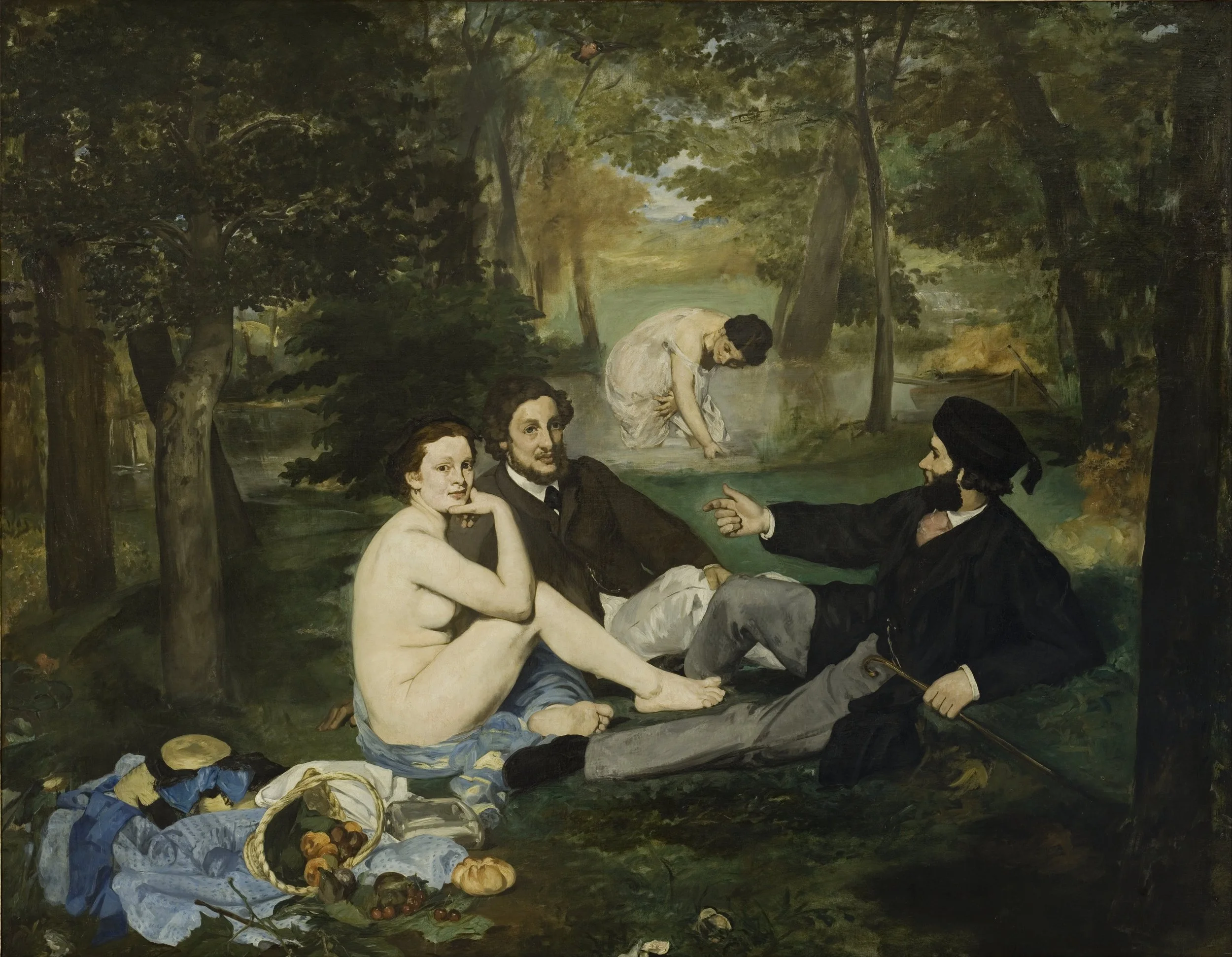
The Salon des Refusés was not a renegade act, it was the official Salon's overflow, a room the establishment itself opened for the work its own jury had thrown out. Manet's Déjeuner sur l'herbe scandalized that room, and the scandal turned out to be the first chapter of modern painting. The institution housed its own future opposition, labelled it as rejected, and watched the label become a lineage. The separate room is not a confession of incoherence. It is how a wall is dismantled in public: first you make the separation visible, then you let it dissolve.
Read that way, the asymmetry Fulton finds disqualifying is simply the order in which absorption happens. New money buys first what it can authenticate: objects, cross-pollinating into collections that already know how to hold them. The screen-native canon arrives later, after the bodies are in the room and the room has learned their names.
Day one of a fair is not a verdict: it is a threshold. Disruption is not so much the enemy of the canon as it is the canon's intake mechanism, observed early enough to look like disorder.
Zero 10's task was never to already be the main floor: it was to make the main floor's eventual expansion look, in retrospect, like it could not have gone any other way… The annex always comes first.