

ARCADE, by ricardo alves
First solo exhibitions carry a particular weight.
They are rarely about arrival, and more often about recalibration. ARCADE, the debut solo exhibition by Ricardo Alves, appears to sit precisely in that space.
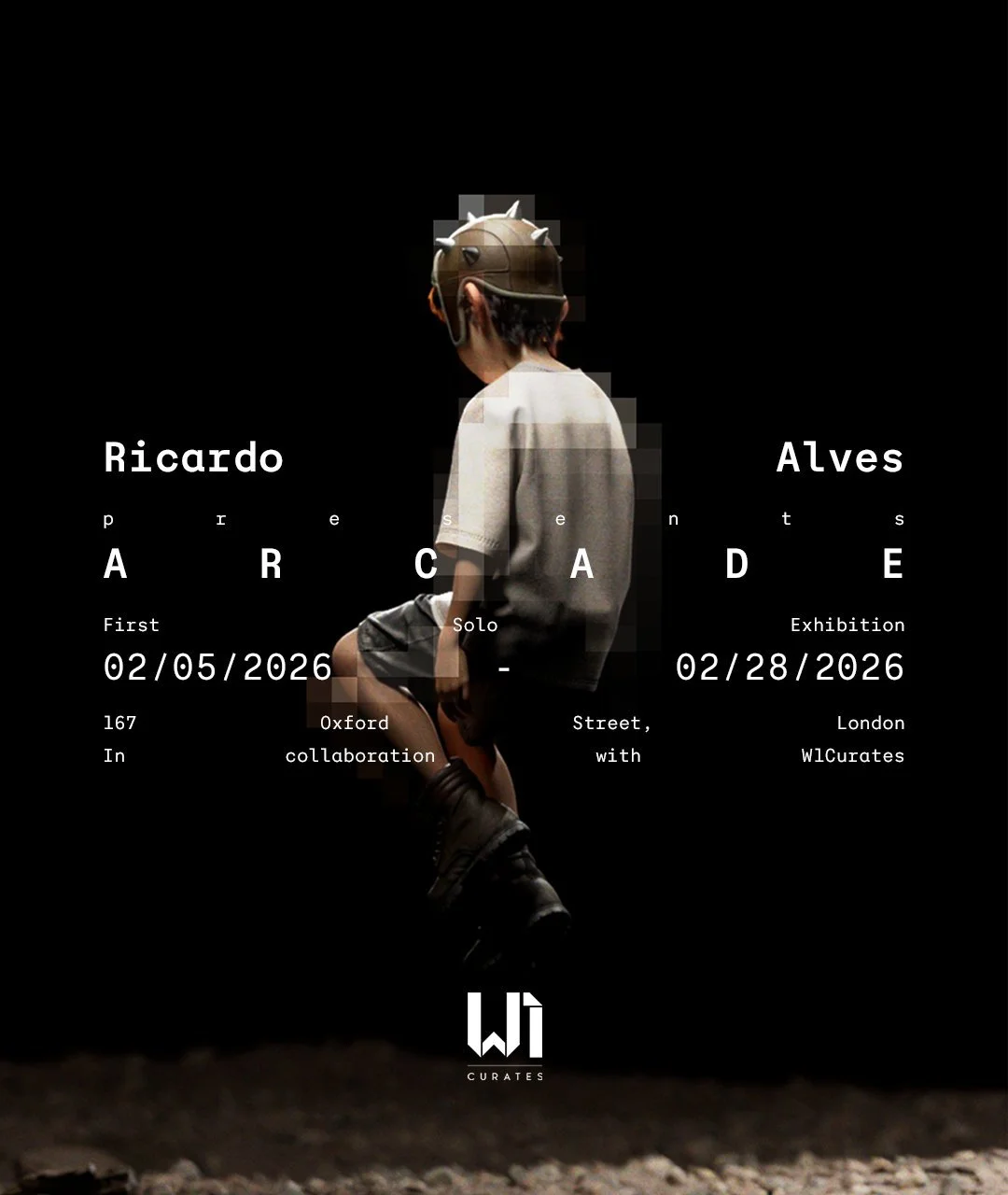
After more than a decade working inside some of the most advanced digital pipelines in contemporary cinema, Alves is stepping into a different register. His shift from large-scale film production to fine digital art is not a change in tools, but a change in questions.
What seems to be at stake in ARCADE is not the demonstration of technical capacity, but the reorientation of attention toward atmosphere, feeling, and psychological presence.
The exhibition introduces a new body of work that engages digital environments and sculptural forms as sites of emotional projection rather than explanation. Instead of focusing on how systems function, the work points toward what it might feel like to exist within them over time. The tension between visibility and understanding, participation and isolation, appears to form the conceptual backbone of the project.
This is a notable position, particularly given Alves’s background. His contributions to productions such as Love, Death & Robots, Star Wars, The Lion King, and Avatar: The Way of Water situate him firmly within a visual culture built on clarity, immersion, and narrative resolution. ARCADE, by contrast, seems to propose something slower and less resolved. A space to linger rather than consume.

What makes this moment significant is not simply that Alves is exhibiting on his own for the first time. It is that he is doing so by resisting the expectations often placed on digital artists with commercial or cinematic backgrounds. There is no obvious attempt to translate spectacle into the gallery, nor to aestheticize technology itself. Instead, ARCADE gestures toward the psychological residue of digital life, a condition many recognize but rarely articulate.
Born in Porto and now based in Lisbon, Alves belongs to a generation of Portuguese artists whose international experience often precedes local recognition. ARCADE arrives as a reminder that Portuguese digital talent is not only technically proficient, but conceptually grounded and globally fluent.
This is not a matter of national pride as branding. It is a matter of acknowledging where serious contemporary work is already being produced.
As a first solo exhibition, ARCADE does not promise answers. It promises a field of inquiry. Its value may lie less in what it resolves, and more in what it allows to remain unresolved.
ARCADE opens on 5 February 2026 and is on view until 28 February 2026. It marks a beginning worth paying attention to.
Estamos muito orgulhosos de ti, Ricardo.